















Customer-obsessed science
Research areas













-
 July 30, 20268 min readInstead of compromising among parameter updates dictated by different training objectives, ControlG allocates computational capacity to objectives sequentially and dynamically.
 -

-
July 9, 202610 min read
-


Featured news

The Build on Trainium program is a $110 million credit initiative supporting AI research at 30 universities including Stanford, UC Berkeley, UIUC, UCLA, CMU, and MIT, with a focus on Responsible AI.

The Antibody Developability Benchmark is powered by one of the most diverse antibody datasets in public literature, enabling transparent performance evaluation for AI-guided antibody design.

Challenge pushes teams to demonstrate measurable gains in secure-coding performance while building AI agents that advance real-world utility and reliability at scale.

Initiative will fund over 100 doctoral students researching machine learning, computer vision, and natural-language processing at nine universities.
-
ECCV 20222022Most existing works on few-shot object detection (FSOD) focus on a setting where both pre-training and few-shot learning datasets are from a similar domain. However, few-shot algorithms are important in multiple domains; hence evaluation needs to reflect the broad applications. We propose a Multi-dOmain Few-Shot Object Detection (MoFSOD) benchmark consisting of 10 datasets from a wide range of domains to
-
SIGDIAL 20222022Though chatbots based on large neural models can often produce fluent responses in open domain conversations, one salient error type is contradiction or inconsistency with the preceding conversation turns. Previous work has treated contradiction detection in bot responses as a task similar to natural language inference, e.g., detect the contradiction between a pair of bot utterances. However, utterances
-
SIGDIAL 20222022Recent progress on neural approaches for language processing has triggered a resurgence of interest on building intelligent open-domain chatbots. However, even the state-of-the-art neural chatbots cannot produce satisfying responses for every turn in a dialog. A practical solution is to generate multiple response candidates for the same context, and then perform response ranking/selection to determine which
-
ECCV 20222022We propose a practical open-world representation learning setting where the objective is to learn the representations for unseen categories without prior knowledge or access to images associated with these novel categories during training. Existing open-world representation learning methods make assumptions, which are often violated in practice and thus fail to generalize to the proposed setting. We propose
-
KDD 2022 Workshop on First Content Understanding and Generation for e-Commerce2022This work explores the usage of Fourier Transform in conjunction with Triplet loss applied on image styles, for reduction of the domain gap between the Source (e.g. Product Images in natural setting) and Target domain (e.g. Product Images on Ecommerce store pages) towards solving the Domain Adaptation problem. Most Unsupervised Domain Adaptation (UDA) algorithms reduce the domain gap between labelled Source
Collaborations
View allWhether you're a faculty member or student, there are number of ways you can engage with Amazon.
View all

Gretchen Ertl
The program offers unrestricted funds and other resources to support research at academic institutions and non-profit organizations in areas that align with our mission.

A global university competition to drive secure innovation in generative AI technology, which focuses on responsible AI and large language model coding security.
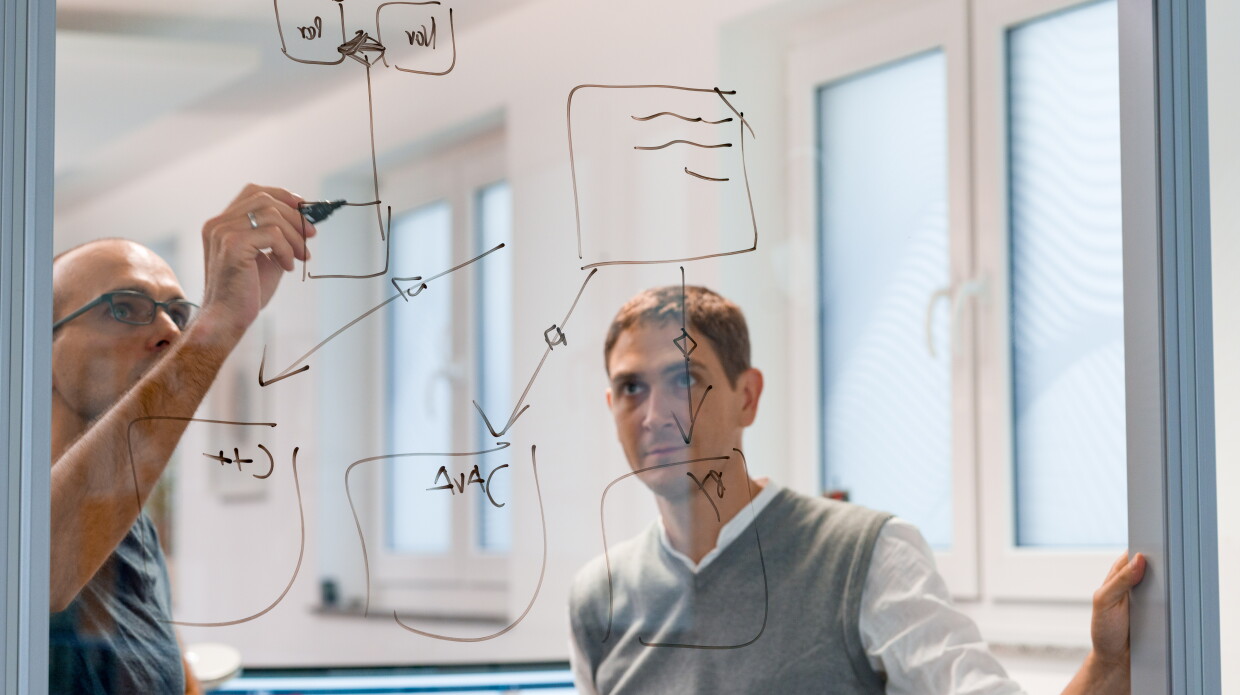
Credit: Wolfram Scheible
We partner with particular academic organizations across the world for deep and sustained collaborations in multiple research areas of mutual interest.

Courtesy of Pai-Ling Yin
We hire world-class academics to work on large-scale technical challenges, while they continue to teach and conduct research at their universities.

