















Customer-obsessed science
Research areas













-
 July 30, 20268 min readInstead of compromising among parameter updates dictated by different training objectives, ControlG allocates computational capacity to objectives sequentially and dynamically.
 -

-
July 9, 202610 min read
-


Featured news

The Build on Trainium program is a $110 million credit initiative supporting AI research at 30 universities including Stanford, UC Berkeley, UIUC, UCLA, CMU, and MIT, with a focus on Responsible AI.

The Antibody Developability Benchmark is powered by one of the most diverse antibody datasets in public literature, enabling transparent performance evaluation for AI-guided antibody design.

Challenge pushes teams to demonstrate measurable gains in secure-coding performance while building AI agents that advance real-world utility and reliability at scale.

Initiative will fund over 100 doctoral students researching machine learning, computer vision, and natural-language processing at nine universities.
-
ColdGuess: A general and effective relational graph convolutional network to tackle cold start casesKDD 2022 Workshop on Mining and Learning with Graphs2022Low-quality listings and bad actor behavior in online retail websites threatens e-commerce business as these result in sub-optimal buying experience and erode customer trust. When a new listing is created, how to tell it has good quality? Is the method effective, fast, and scalable? Previous approaches often face three limitations/challenges: (1) unable to handle cold start problems where new sellers/listings
-
RecSys 2022 Workshop on CONSEQUENCES – Causality, Counterfactuals and Sequential Decision-Making2022Adaptive experimental design methods are increasingly being used in industry as a tool to boost testing throughput or reduce experimentation cost relative to traditional A/B/N testing methods. This paper shares lessons learned regarding the challenges and pitfalls of naively using adaptive experimentation systems in industrial settings where non-stationarity is prevalent, while also providing perspectives
-
RecSys 2022 Workshop on CONSEQUENCES – Causality, Counterfactuals and Sequential Decision-Making2022We propose diagnostics, based on control variates, to detect data quality issues in logged bandit feedback data, which is of critical importance for accurate offline evaluation and training of recommendation policies. Our diagnostics can provably detect two common types of data issues: (1) when the policy that logged the data was insufficiently randomized; (2) when the logged propensity values are incorrect
-
CONSEQUENCES+REVEAL 20222022A critical need for industrial recommender systems is the ability to evaluate recommendation policies offline, before deploying them to production. Unfortunately, widely used off-policy evaluation methods either make strong assumptions about how users behave that can lead to excessive bias, or they make fewer assumptions and suffer from large variance. We tackle this problem by developing a new estimator
-
UAI 20222022Despite the increasing relevance of forecasting methods, causal implications of these algorithms remain largely unexplored. This is concerning considering that, even under simplifying assumptions such as causal sufficiency, the statistical risk of a model can differ significantly from its causal risk. Here, we study the problem of causal generalization—generalizing from the observational to interventional
Collaborations
View allWhether you're a faculty member or student, there are number of ways you can engage with Amazon.
View all

Gretchen Ertl
The program offers unrestricted funds and other resources to support research at academic institutions and non-profit organizations in areas that align with our mission.

A global university competition to drive secure innovation in generative AI technology, which focuses on responsible AI and large language model coding security.
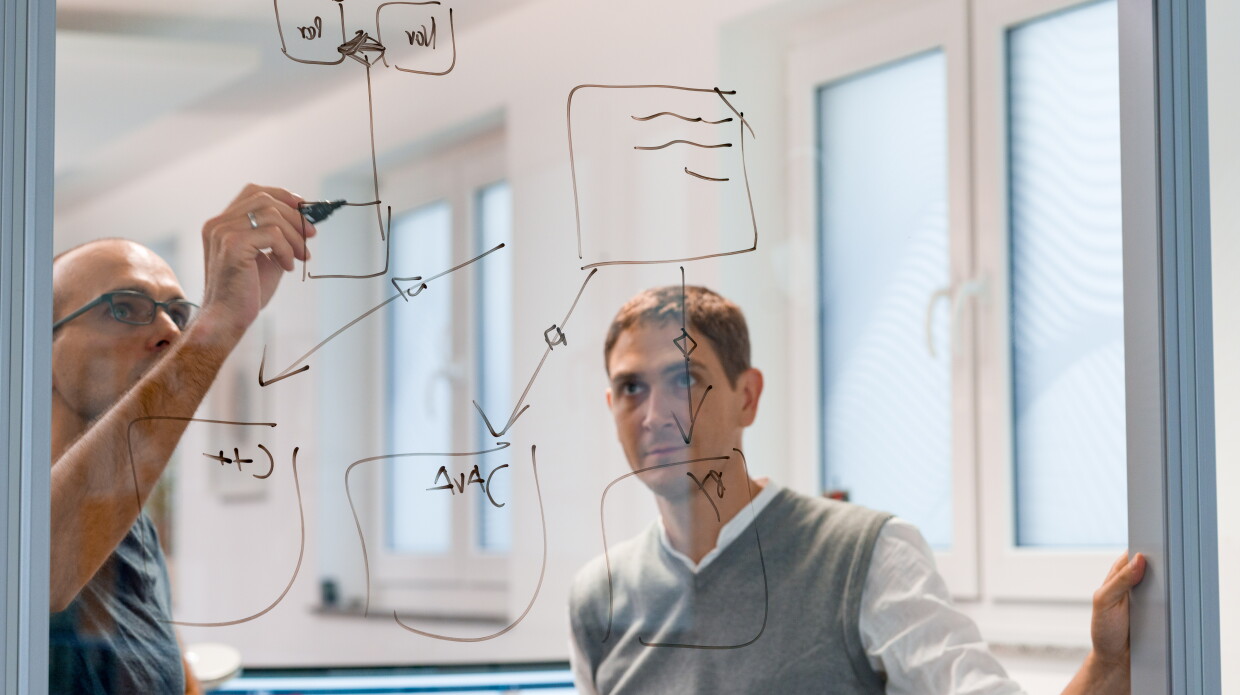
Credit: Wolfram Scheible
We partner with particular academic organizations across the world for deep and sustained collaborations in multiple research areas of mutual interest.

Courtesy of Pai-Ling Yin
We hire world-class academics to work on large-scale technical challenges, while they continue to teach and conduct research at their universities.

