Runtime optimizations and a thorough evaluation process driven by agentic AI help ensure that models written in PyTorch will execute efficiently and reliably on Trainium systems.

Expanding the mix of synthetic data used to train a tabular foundation model enables it to adapt to new tables without new models and lead the single-model field on the TabArena benchmark.

Using the Neuron Kernel Interface, a Reactor–AWS collaboration tackled the dynamic shapes, memory access patterns, and cache management that make real-time autoregressive diffusion hard—building techniques that generalize across models.


Three new papers from Amazon Bio Discovery address bottlenecks in AI-driven antibody engineering, from benchmarking binding predictors to experimentally validating de novo design.
New research indicates that AI agents learn compressible models of data, which don’t have enough space to enable memorization.
Customer-obsessed science

Research areas


-
 November 16, 202611 min readNew open-source tool turns existing test suites into sets of formal-verification tasks, which catch buggy solutions that tests alone would miss.
-
 November 11, 20265 min read
-
-
-


Featured news

The collaboration aims to advance research while broadening participation and translating discovery into real-world solutions.

Submissions open October 1 and close on November 11, 2026

The collaboration will support research in robotics, industrial and systems engineering, and aerospace technology while fostering innovation in foundational and emerging technologies.

The Build on Trainium program is a $110 million credit initiative supporting AI research at 30 universities including Stanford, UC Berkeley, UIUC, UCLA, CMU, and MIT, with a focus on Responsible AI.

The Antibody Developability Benchmark is powered by one of the most diverse antibody datasets in public literature, enabling transparent performance evaluation for AI-guided antibody design.

Challenge pushes teams to demonstrate measurable gains in secure-coding performance while building AI agents that advance real-world utility and reliability at scale.

Initiative will fund over 100 doctoral students researching machine learning, computer vision, and natural-language processing at nine universities.
-
IWSLT 20182018Most modern neural machine translation (NMT) systems rely on presegmented inputs. Segmentation granularity importantly determines the input and output sequence lengths, hence the modeling depth, and source and target vocabularies, which in turn determine model size, computational costs of softmax normalization, and handling of out-of-vocabulary words. However, the current practice is to use static, heuristic-based
-
ICDM 20182018Structured records – data with a fixed number of descriptive fields (or attributes) – are often represented by onehot encoded or term frequency-inverse document frequency (TF-IDF) weighted vectors. These vectors are typically sparse and long, and are inefficient in representing structured records. Here, we introduce Record2Vec, a framework for generating dense embeddings of structured records by training
-
ICLR 20192018In complex transfer learning scenarios new tasks might not be tightly linked to previous tasks. Approaches that transfer information contained only in the final parameters of a source model will therefore struggle. Instead, transfer learning at a higher level of abstraction is needed. We propose Leap, a framework that achieves this by transferring knowledge across learning processes. We associate each task
-
NAACL 20182018Tree-structured LSTMs have shown advantages in learning semantic representations by exploiting syntactic information. Most existing methods model tree structures by bottomup combinations of constituent nodes using the same shared compositional function and often making use of input word information only. The inability to capture the richness of compositionality makes these models lack expressive power.
-
NeurIPS 20182018In this paper we study techniques to improve the performance of bilinear embedding methods for knowledge graph completion on large datasets, where at each epoch the model sees a very small percentage of the training data, and the number of generated negative examples for each positive example is limited to a small portion of the entire set of entities. We first present a heuristic method to infer the types
Collaborations
View allWhether you're a faculty member or student, there are number of ways you can engage with Amazon.
View all

Gretchen Ertl
The program offers unrestricted funds and other resources to support research at academic institutions and non-profit organizations in areas that align with our mission.
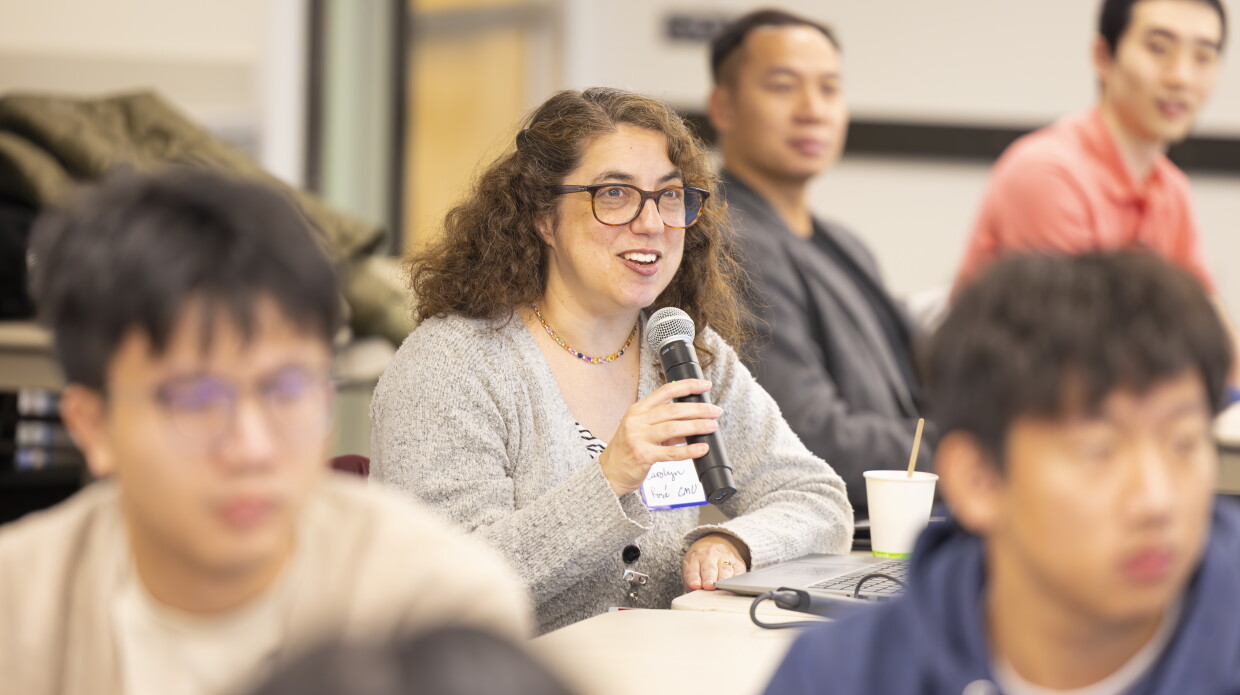
A global university competition to drive secure innovation in generative AI technology, which focuses on responsible AI and large language model coding security.

Credit: Wolfram Scheible
We partner with particular academic organizations across the world for deep and sustained collaborations in multiple research areas of mutual interest.
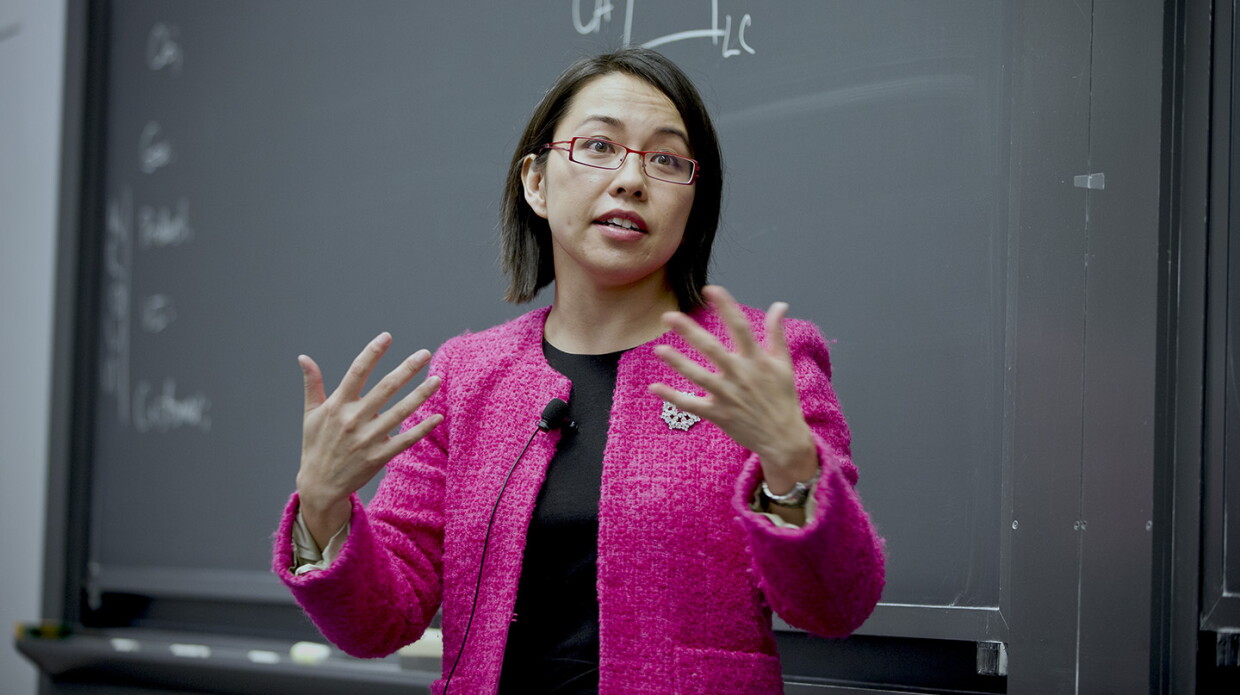
Courtesy of Pai-Ling Yin
We hire world-class academics to work on large-scale technical challenges, while they continue to teach and conduct research at their universities.