


Runtime optimizations and a thorough evaluation process driven by agentic AI help ensure that models written in PyTorch will execute efficiently and reliably on Trainium systems.

Expanding the mix of synthetic data used to train a tabular foundation model enables it to adapt to new tables without new models and lead the single-model field on the TabArena benchmark.

Using the Neuron Kernel Interface, a Reactor–AWS collaboration tackled the dynamic shapes, memory access patterns, and cache management that make real-time autoregressive diffusion hard—building techniques that generalize across models.


Three new papers from Amazon Bio Discovery address bottlenecks in AI-driven antibody engineering, from benchmarking binding predictors to experimentally validating de novo design.
New research indicates that AI agents learn compressible models of data, which don’t have enough space to enable memorization.
Customer-obsessed science

Research areas


-
 November 11, 20265 min readStatic analysis of deployed networks helps reduce the risk that sensitive data leaks across partitions, supporting the security and reliability of global-scale networking.
-

-
-
-
October 20, 20263 min read


Featured news

The collaboration aims to advance research while broadening participation and translating discovery into real-world solutions.

Submissions open October 1 and close on November 11, 2026

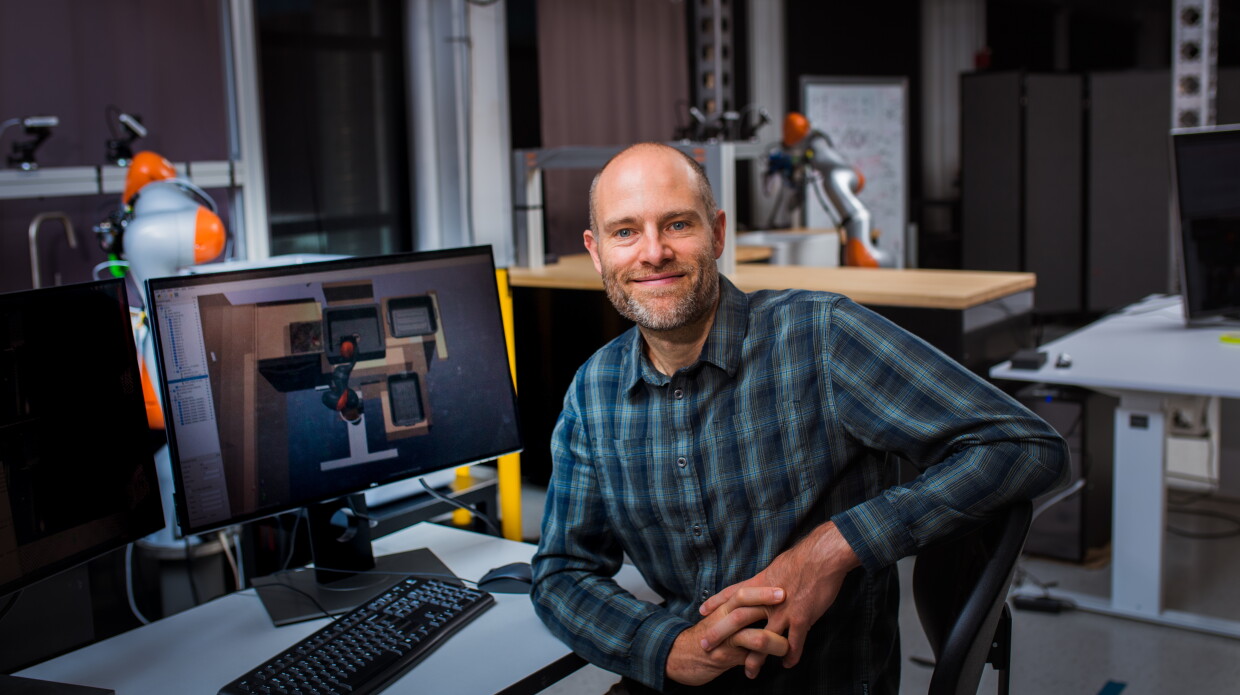
The collaboration will support research in robotics, industrial and systems engineering, and aerospace technology while fostering innovation in foundational and emerging technologies.

The Build on Trainium program is a $110 million credit initiative supporting AI research at 30 universities including Stanford, UC Berkeley, UIUC, UCLA, CMU, and MIT, with a focus on Responsible AI.

The Antibody Developability Benchmark is powered by one of the most diverse antibody datasets in public literature, enabling transparent performance evaluation for AI-guided antibody design.

Challenge pushes teams to demonstrate measurable gains in secure-coding performance while building AI agents that advance real-world utility and reliability at scale.

Initiative will fund over 100 doctoral students researching machine learning, computer vision, and natural-language processing at nine universities.
-
PRX Quantum2021Consumption of magic states promotes the stabilizer model of computation to universal quantum computation. Here, we propose three different classical algorithms for simulating such universal quantum circuits, and characterize them by establishing precise connections with a family of magic monotones. Our first simulator introduces a new class of quasiprobability distributions and connects its runtime to
-
arXiv2021The Eigenstate Thermalization Hypothesis (ETH) has played a major role in explaining thermodynamic phenomena in quantum systems. However, so far, no connection has been known between ETH and the timescale of thermalization. In this paper, we rigorously show that ETH indeed implies fast thermalization to the global Gibbs state. We show fast convergence for two models of thermalization. In the first, the
-
Information Retrieval Journal2021In top-k ranked retrieval the goal is to efficiently compute an ordered list of the highest scoring k documents according to some stipulated similarity function such as the well-known BM25 approach. In most implementation techniques a min-heap of size k is used to track the top scoring candidates. In this work we consider the question of how best to retrieve the second page of search results, given that
-
arXiv2021We study the distribution over measurement outcomes of noisy random quantum circuits in the low-fidelity regime. We show that, for local noise that is sufficiently weak and unital, correlations (measured by the linear cross-entropy benchmark) between the output distribution p_(noisy) of a generic noisy circuit instance and the output distribution pideal of the corresponding noiseless instance shrink exponentially
-
arXiv2021Classical machine learning (ML) provides a potentially powerful approach to solving challenging quantum many-body problems in physics and chemistry. However, the advantages of ML over more traditional methods have not been firmly established. In this work, we prove that classical ML algorithms can efficiently predict ground state properties of gapped Hamiltonians in finite spatial dimensions, after learning
Collaborations
View allWhether you're a faculty member or student, there are number of ways you can engage with Amazon.
View all
Gretchen Ertl
The program offers unrestricted funds and other resources to support research at academic institutions and non-profit organizations in areas that align with our mission.
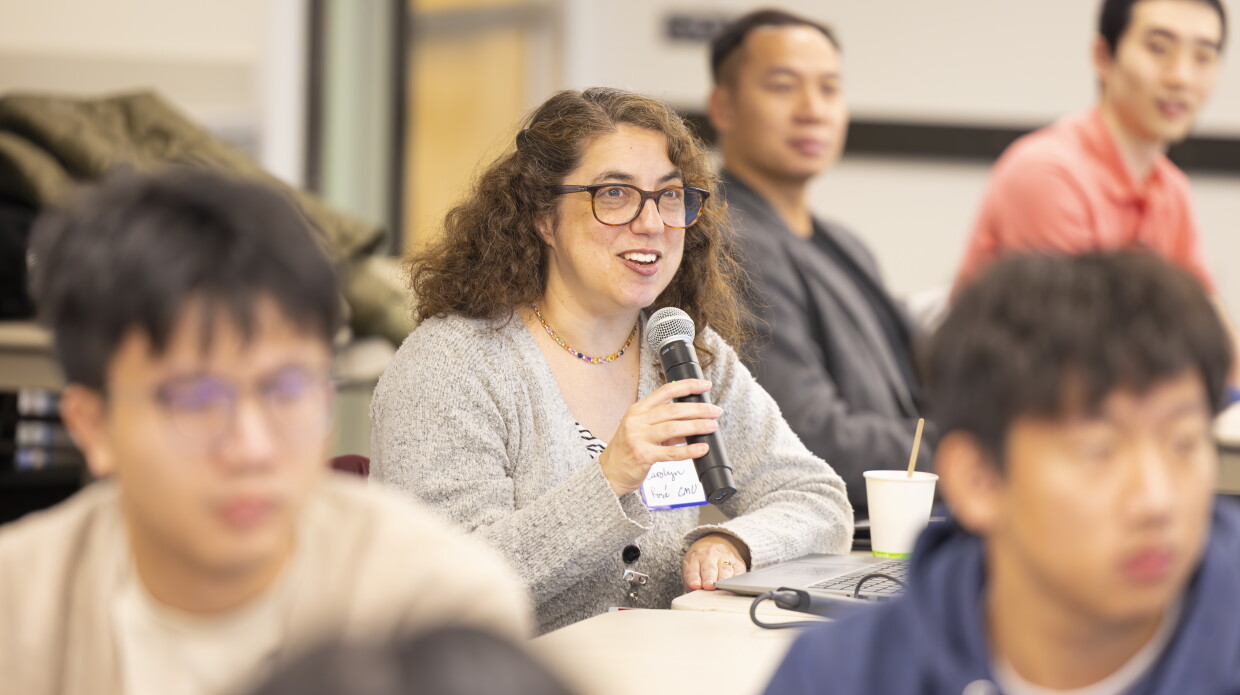
A global university competition to drive secure innovation in generative AI technology, which focuses on responsible AI and large language model coding security.

Credit: Wolfram Scheible
We partner with particular academic organizations across the world for deep and sustained collaborations in multiple research areas of mutual interest.
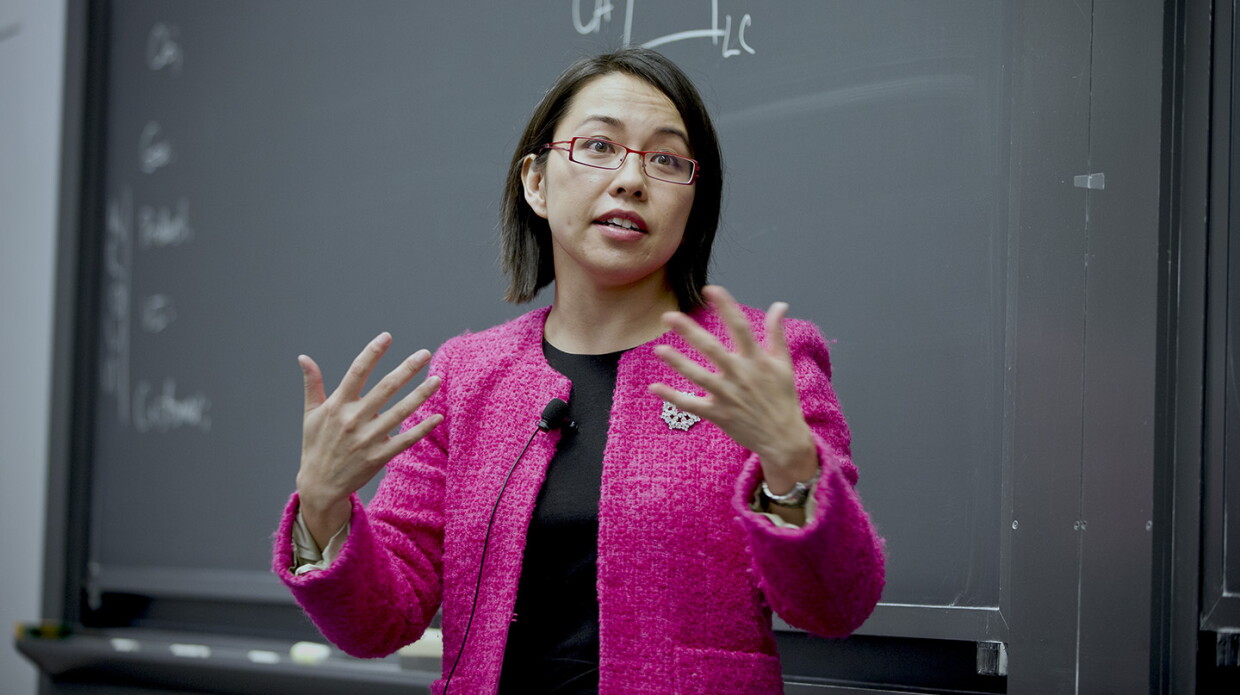
Courtesy of Pai-Ling Yin
We hire world-class academics to work on large-scale technical challenges, while they continue to teach and conduct research at their universities.

