


Runtime optimizations and a thorough evaluation process driven by agentic AI help ensure that models written in PyTorch will execute efficiently and reliably on Trainium systems.

With new tools that make it easier to check mathematical proofs — even as they’re being constructed — AI is becoming a valuable partner in mathematical discovery.

Expanding the mix of synthetic data used to train a tabular foundation model enables it to adapt to new tables without new models and lead the single-model field on the TabArena benchmark.

Using the Neuron Kernel Interface, a Reactor–AWS collaboration tackled the dynamic shapes, memory access patterns, and cache management that make real-time autoregressive diffusion hard—building techniques that generalize across models.


Three new papers from Amazon Bio Discovery address bottlenecks in AI-driven antibody engineering, from benchmarking binding predictors to experimentally validating de novo design.
Customer-obsessed science

Research areas


-
 November 16, 202611 min readNew open-source tool turns existing test suites into sets of formal-verification tasks, which catch buggy solutions that tests alone would miss.
-
 November 11, 20265 min read
-
-
-


Featured news

The collaboration aims to advance research while broadening participation and translating discovery into real-world solutions.

Submissions open October 1 and close on November 11, 2026

The collaboration will support research in robotics, industrial and systems engineering, and aerospace technology while fostering innovation in foundational and emerging technologies.

The Build on Trainium program is a $110 million credit initiative supporting AI research at 30 universities including Stanford, UC Berkeley, UIUC, UCLA, CMU, and MIT, with a focus on Responsible AI.

The Antibody Developability Benchmark is powered by one of the most diverse antibody datasets in public literature, enabling transparent performance evaluation for AI-guided antibody design.

Challenge pushes teams to demonstrate measurable gains in secure-coding performance while building AI agents that advance real-world utility and reliability at scale.

Initiative will fund over 100 doctoral students researching machine learning, computer vision, and natural-language processing at nine universities.
-
ACL-IJCNLP 2021 Workshop on e-Commerce and NLP (ECNLP)2021In this paper, we present SANTA, a scalable framework to automatically normalize Ecommerce attribute values (e.g. “Win 10 Pro”) to a fixed set of pre-defined canonical values (e.g. “Windows 10”). Earlier works on attribute normalization focused on fuzzy string matching (also referred as syntactic matching in this paper). In this work, we first perform an extensive study of nine syntactic matching algorithms
-
KDD 20212021Understanding product attributes plays an important role in improving online shopping experience for customers and serves as an integral part for constructing a product knowledge graph. Most existing methods focus on attribute extraction from text description or utilize visual information from product images such as shape and color. Compared to the inputs considered in prior works, a product image in fact
-
ACL-IJCNLP 2021 Workshop on e-Commerce and NLP (ECNLP)2021With the rapid growth of online video streaming, recent years have seen increasing concerns about profane language in their content. Detecting profane language in streaming services is challenging due to the long sentences appeared in a video. While recent research on handling long sentences has focused on developing deep learning modeling techniques, little work has focused on techniques on improving data
-
Interspeech 20212021We propose a simple yet effective method to compress an RNN-Transducer (RNN-T) through the well-known knowledge distillation paradigm. We show that the transducer’s encoder outputs naturally have a high entropy and contain rich information about acoustically similar word-piece confusions. This rich information is suppressed when combined with the lower entropy decoder outputs to produce the joint network
-
Interspeech 20212021Neural Language Models (NLM), when trained and evaluated with context spanning multiple utterances, have been shown to consistently outperform both conventional n-gram language models and NLMs that use limited context. In this paper, we investigate various techniques to incorporate turn based context history into both recurrent (LSTM) and Transformer-XL based NLMs. For recurrent based NLMs, we explore context
Collaborations
View allWhether you're a faculty member or student, there are number of ways you can engage with Amazon.
View all

Gretchen Ertl
The program offers unrestricted funds and other resources to support research at academic institutions and non-profit organizations in areas that align with our mission.

A global university competition to drive secure innovation in generative AI technology, which focuses on responsible AI and large language model coding security.

Credit: Wolfram Scheible
We partner with particular academic organizations across the world for deep and sustained collaborations in multiple research areas of mutual interest.
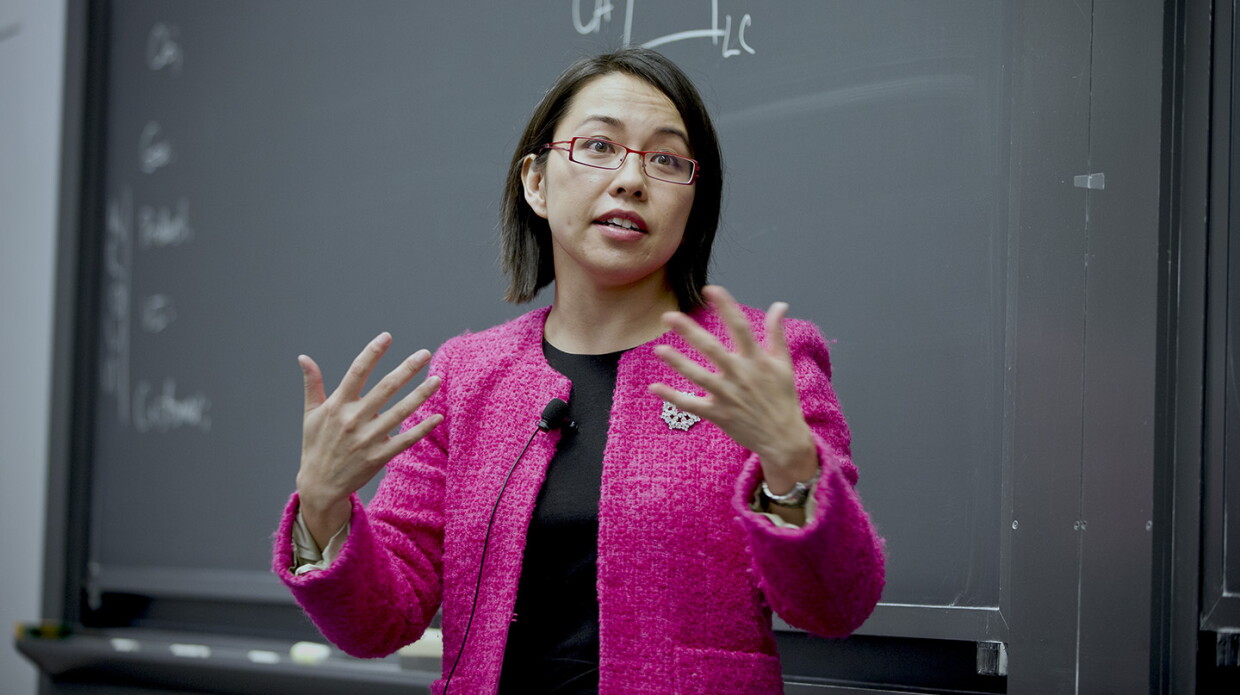
Courtesy of Pai-Ling Yin
We hire world-class academics to work on large-scale technical challenges, while they continue to teach and conduct research at their universities.

