


Runtime optimizations and a thorough evaluation process driven by agentic AI help ensure that models written in PyTorch will execute efficiently and reliably on Trainium systems.

Using the Neuron Kernel Interface, a Reactor–AWS collaboration tackled the dynamic shapes, memory access patterns, and cache management that make real-time autoregressive diffusion hard—building techniques that generalize across models.


Three new papers from Amazon Bio Discovery address bottlenecks in AI-driven antibody engineering, from benchmarking binding predictors to experimentally validating de novo design.
New research indicates that AI agents learn compressible models of data, which don’t have enough space to enable memorization.

How the Verus "program verifier", which automatically checks code against a mathematical specification of its functionality, helps increase security assurance in software projects.

Ten years after we founded the Automated Reasoning Group, mathematical logic has moved from academic research into production services that secure millions of customer workloads — demonstrating that systems can be provably correct, not just probably correct.
Customer-obsessed science

Research areas


-
 October 29, 20265 min readTwo optimization techniques, when combined, can significantly improve a model’s speed and cost effectiveness without sacrificing quality.
-

-
October 20, 20263 min read
-
October 12, 202614 min read
-


Featured news

The collaboration aims to advance research while broadening participation and translating discovery into real-world solutions.

Submissions open October 1 and close on November 11, 2026

The collaboration will support research in robotics, industrial and systems engineering, and aerospace technology while fostering innovation in foundational and emerging technologies.

The Build on Trainium program is a $110 million credit initiative supporting AI research at 30 universities including Stanford, UC Berkeley, UIUC, UCLA, CMU, and MIT, with a focus on Responsible AI.

The Antibody Developability Benchmark is powered by one of the most diverse antibody datasets in public literature, enabling transparent performance evaluation for AI-guided antibody design.

Challenge pushes teams to demonstrate measurable gains in secure-coding performance while building AI agents that advance real-world utility and reliability at scale.

Initiative will fund over 100 doctoral students researching machine learning, computer vision, and natural-language processing at nine universities.
-
On the impact of gas line absorption in hollow core fibers on the timing recovery of coherent modemsPSC 2026 (International Conference on Photonics in Switching and Computing)2026We discuss the impact of gas line absorption (GLA) in hollow core fibers (HCFs) on coherent modem timing recovery (TR). The latter is simulated by placing the timing error detector pre- and post-adaptive equalization.
-
2026LLM agents are increasingly deployed as systems built around editable external harnesses, including prompts, skills, memories and tools, that shape task execution without changing model parameters. Harness self-evolution adapts such agents by updating these harnesses from execution evidence. Yet it remains unclear whether a model's base capability in task-solving predicts its capabilities in harness self-evolution
-
2026Agent ecosystems now include thousands of MATS components (Models, Agents, Tools, and Skills), yet their discovery still relies on in-context routing. These systems read a registry (names, hints, or descriptions, as context budget permits), pick a candidate, invoke it, and retry on failure. This pattern degrades with scale, and registries are growing fast. We recast capability discovery as search over a
-
2026Warehouse operations are governed by Standard Operating Procedures (SOPs) that encode complex, multi-system decision logic, which must be executed reliably under strict time constraints, yet LLM agents lack mechanisms to enforce procedural compliance and degrade under the context overload full SOP specifications introduce. We present Eluna, a production-deployed agentic system for reliable SOP execution
-
ACM SIGSPATIAL 20262026Accurate and timely identification of road closures is critical for large-scale navigation and logistics systems, yet remains challenging due to the need to jointly reason over visual evidence, spatial context, and road network topology. Existing approaches either rely on manual map updates or focus on detecting closure-related objects without resolving which road segment is affected. In this work, we introduce
Collaborations
View allWhether you're a faculty member or student, there are number of ways you can engage with Amazon.
View all

Gretchen Ertl
The program offers unrestricted funds and other resources to support research at academic institutions and non-profit organizations in areas that align with our mission.
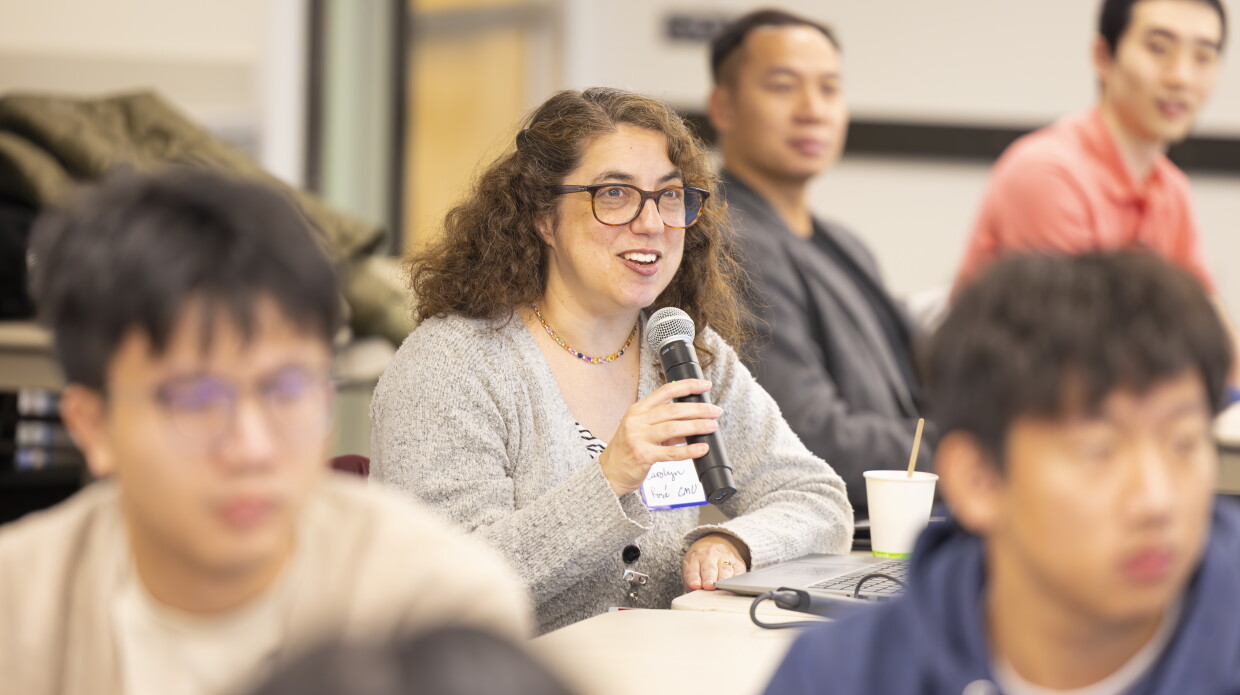
A global university competition to drive secure innovation in generative AI technology, which focuses on responsible AI and large language model coding security.

Credit: Wolfram Scheible
We partner with particular academic organizations across the world for deep and sustained collaborations in multiple research areas of mutual interest.
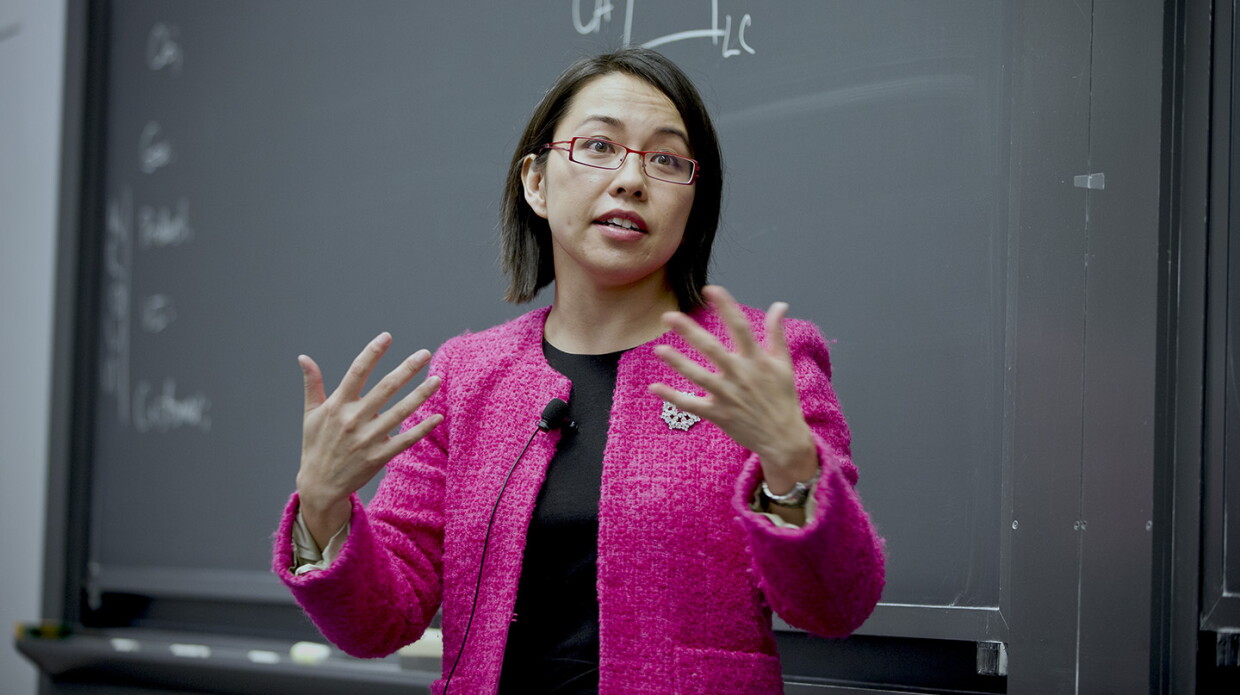
Courtesy of Pai-Ling Yin
We hire world-class academics to work on large-scale technical challenges, while they continue to teach and conduct research at their universities.

