















From quantum computing breakthroughs and foundation models for robotics to the evolution of Amazon Aurora and advances in agentic AI, these are the posts that captured readers' attention in 2025.


From foundation model safety frameworks and formal verification at cloud scale to advanced robotics and multimodal AI reasoning, these are the most viewed publications from Amazon scientists and collaborators in 2025.
Customer-obsessed science


Research areas


-
 December 10, 20255 min readNew audio-processing technology is making entertainment more accessible for millions of viewers.
 -
 December 8, 20258 min read
 -
December 5, 20256 min read
-
-


Featured news

Challenge pushes teams to demonstrate measurable gains in secure-coding performance while building AI agents that advance real-world utility and reliability at scale.

Meet the 63 Amazon Research Award (ARA) recipients, who represent 41 universities in 8 countries.
Initiative will fund over 100 doctoral students researching machine learning, computer vision, and natural-language processing at nine universities.

David Chang/Getty Images/iStockphoto
Led by David Luan and Pieter Abbeel, the lab will focus on developing new foundational capabilities for enabling useful AI agents.
-
2024We present Event-focused Search, an automated and scalable pipeline designed to facilitate event discovery and enhance event-based search. This is done by leveraging large language models (LLMs) to populate event datasets, perform temporal search based on selected dates, and aggregate search results based on appropriate events based on those searches. We illustrate this pipeline through proof-of-concept
-
2024NeurAlly-Decomposed Oracle (NADO) is a powerful approach for controllable generation with large language models. It is designed to avoid catastrophic forgetting while achieving guaranteed convergence to an entropy-maximized closed-form optimal solution with reasonable modeling capacity. Despite the success, several challenges arise when apply NADO to a wide range of scenarios. Vanilla NADO suffers from
-
CVPR 2024 Workshop on Open-Vocabulary 3D Scene Understanding2024Affordance grounding refers to the task of finding the area of an object with which one can interact. It is a fundamental but challenging task, as a successful solution requires the comprehensive understanding of a scene in multiple aspects including detection, localization, and recognition of objects with their parts, of geospatial configuration/layout of the scene, of 3D shapes and physics, as well as
-
SIGIR 2024 Workshop on Generative Information Retrieval2024Large Language Models (LLMs) can be leveraged to improve performance in various stages of the search pipeline – the indexing stage, the query understanding stage, and the ranking or re-ranking stage. The latter two stages involve invoking a LLM during inference, adding latency in fetching the final ranked list of documents. Index enhancement, on the other hand, can be done in the indexing stage, in near
-
SIGIR 2024 Workshop on eCommerce2024In a typical e-commerce setting, Content Ranking Optimization (CRO) mechanisms are employed to surface content on the search page to fulfill customers’ shopping missions. CRO commonly utilizes models such as contextual deep bandits model to independently rank content at different positions, e.g., one optimizer dedicated to organic search results and another to sponsored results. However, this regional optimization
Collaborations
View allWhether you're a faculty member or student, there are number of ways you can engage with Amazon.
View all

Gretchen Ertl
The program offers unrestricted funds and other resources to support research at academic institutions and non-profit organizations in areas that align with our mission.
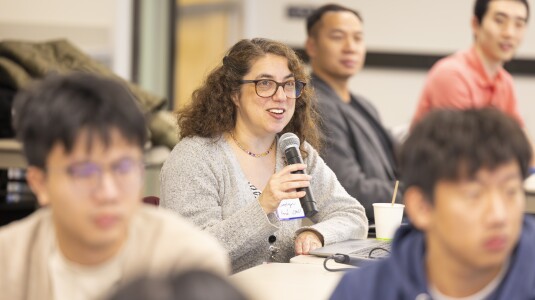
A global university competition to drive secure innovation in generative AI technology, which focuses on responsible AI and large language model coding security.
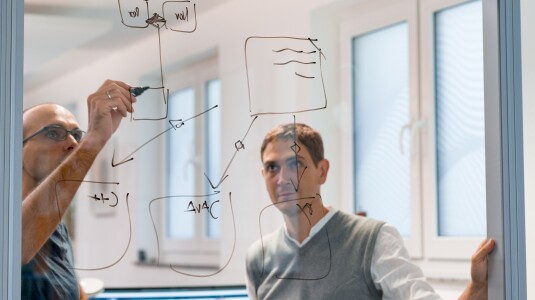
Credit: Wolfram Scheible
We partner with particular academic organizations across the world for deep and sustained collaborations in multiple research areas of mutual interest.
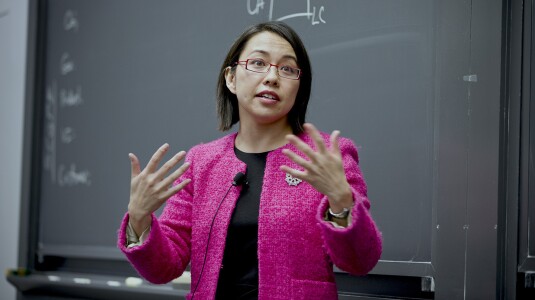
Courtesy of Pai-Ling Yin
We hire world-class academics to work on large-scale technical challenges, while they continue to teach and conduct research at their universities.

