A quick guide to Amazon’s 50-plus papers at EMNLP 2024

Large language models predominate, both as a research subject themselves and as tools for researching topics of particular interest to Amazon, such as speech, recommendations, and information retrieval.

Large language models (LLMs) have come to dominate the field of natural-language processing, so it’s no surprise that they also dominate the research that Amazon scientists are presenting at this year’s Conference on Empirical Methods in Natural-Language Processing (EMNLP). LLM training is the topic with the greatest number of Amazon papers, followed closely by strategies for mitigating misinformation in LLMs’ outputs — including but not limited to hallucinations. At the same time, a number of papers apply LLMs to topics of traditional interest at Amazon, such as speech, recommender systems, and information retrieval. (Papers marked with asterisks were accepted to Findings of EMNLP.)

AI agents

MARCO: Multi-agent real-time chat orchestration
Anubhav Shrimal, Shervin Malmasi, Kriti Biswas, Swarnalatha Raghuraman, Anish Nediyanchath, Yi Zhang, Promod Yenigalla

Code generation

CodeFort: Robust training for code generation models
Yuhao Zhang, Shiqi Wang, Haifeng Qian, Zijian Wang, Mingyue Shang, Linbo Liu, Sanjay Krishna Gouda, Baishakhi Ray, Murali Krishna Ramanathan, Xiaofei Ma, Anoop Deoras

Socratic human feedback (SoHF): Expert steering strategies for LLM code generation
Subramanian Chidambaram, Erran Li, Min Bai, Xiaopeng LI, Kaixiang Lin, Xiong Zhou, Alex C. Williams

Structured object language modeling (SoLM): Native structured objects generation conforming to complex schemas with self-supervised denoising
Amir Tavanaei, Kee Kiat Koo, Hayreddin Ceker, Shaobai Jiang, Qi Li, Julien Han, Karim Bouyarmane

Contrastive decoding

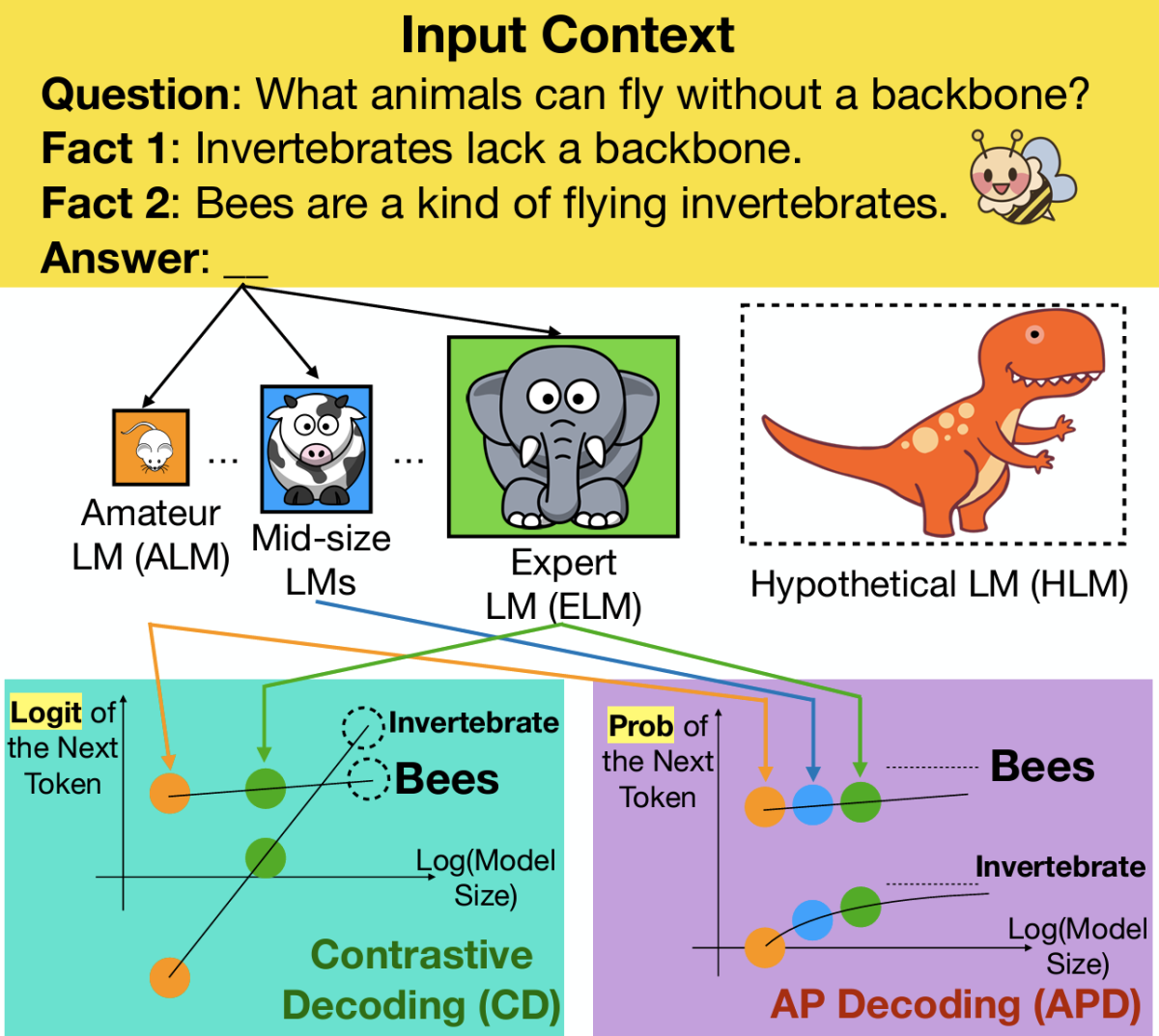
Explaining and improving contrastive decoding by extrapolating the probabilities of a huge and hypothetical LM
Haw-Shiuan Chang, Nanyun Peng, Mohit Bansal, Anil Ramakrishna, Tagyoung Chung
Explaining and improving contrastive decoding by extrapolating the probabilities of a huge and hypothetical LM.png
Given a simple question with clues, contrastive decoding could have an “obvious blindness” (e.g., assigning higher probability to an uncommon answer, such as "invertebrate", than to the most obvious answer, "bees"). In contrast, the asymptotic probability decoding proposed in "Explaining and improving contrastive decoding by extrapolating the probabilities of a huge and hypothetical LM" correctly assigns the highest probability to "bees" by leveraging the probabilities from multiple LMs of different sizes.

Data integration

ASTRA: Automatic schema matching using machine translation
Tarang Chugh, Deepak Zambre

Learning from natural language explanations for generalizable entity matching
Somin Wadhwa, Adit Krishnan, Runhui Wang, Byron C. Wallace, Chris (Luyang) Kong

Pretraining and finetuning language models on geospatial networks for accurate address matching
Saket Maheshwary, Arpan Paul, Saurabh Sohoney

Retrieval augmented spelling correction for e-commerce applications
Xuan Guo, Rohit Patki, Dante Everaert, Christopher Potts

Dataset distillation

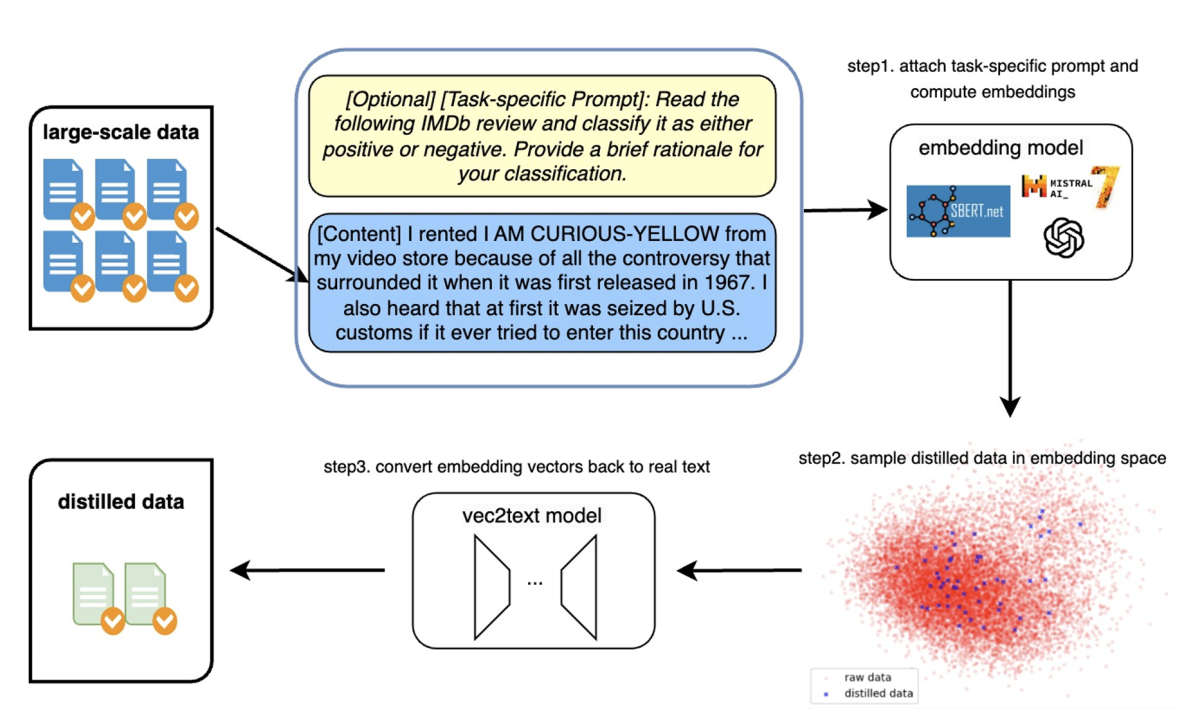
Textual dataset distillation via language model embedding
Yefan Tao, Chris (Luyang) Kong, Andrey Kan, Laurent Callot
Textual dataset distillation via language model embedding: DaLLME.png
The DaLLME framework proposed in "Textual dataset distillation via language model embedding" begins by using a language model to transform raw textual data into embedding vectors. A set of distilled vectors is then derived in the embedding space, through a process designed to encapsulate maximum informational content. Finally, the vec2text model translates these distilled vectors back into textual form.

Document understanding

DocKD: Knowledge distillation from LLMs for open-world document understanding models
Sungnyun Kim, Haofu Liao, Srikar Appalaraju, Peng Tang, Zhuowen Tu, Ravi Kumar Satzoda, R. Manmatha, Vijay Mahadevan, Stefano Soatto

Information retrieval

Evaluating D-MERIT of partial-annotation on information retrieval
Royi Rassin, Yaron Fairstein, Oren Kalinsky, Guy Kushilevitz, Nachshon Cohen, Alexander Libov, Yoav Goldberg

Identifying high consideration e-commerce search queries
Zhiyu Chen, Jason Choi, Besnik Fetahu, Shervin Malmasi

Learning when to retrieve, what to rewrite, and how to respond in conversational QA*
Nirmal Roy, Leonardo Ribeiro, Rexhina Blloshmi, Kevin Small

Natural-language understanding

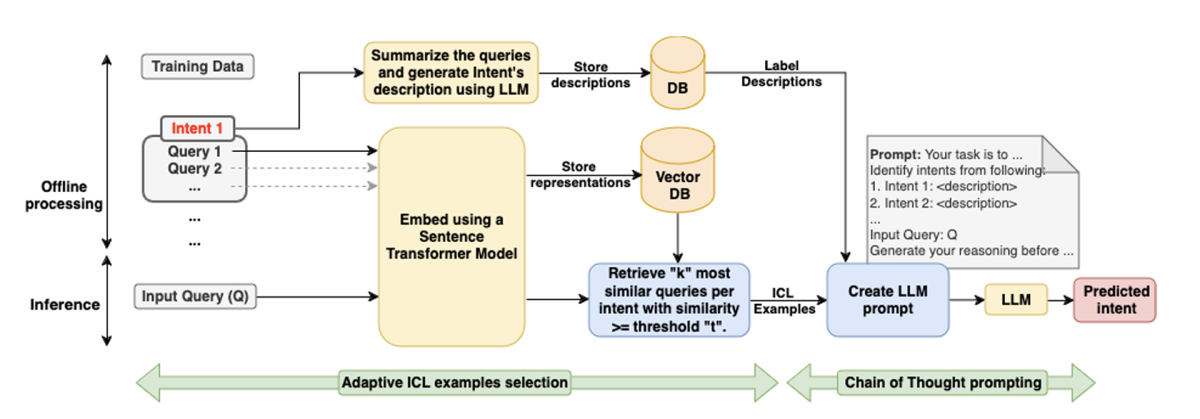
Intent detection in the age of LLMs
Gaurav Arora, Shreya Jain, Srujana Merugu
Intent detection in the age of LLMs.png
"Intent detection in the age of LLMs" proposes a methodology for adaptive in-context learning and chain-of-thought-based intent detection using LLMs.

Predicting entity salience in extremely short documents
Ben Bullough, Harrison Lundberg, Chen Hu, Weihang Xiao

LLM evaluation

AXCEL: Automated eXplainable consistency evaluation using LLMs*
P Aditya Sreekar, Sahil Verma, Suransh Chopra, Sarik Ghazarian, Abhishek Persad, Narayanan Sadagopan

Precise model benchmarking with only a few observations
Riccardo Fogliato, Pratik Patil, Nil-Jana Akpinar, Mathew Monfort

LLM fine tuning

AdaZeta: Adaptive zeroth-order tensor-train adaption for memory-efficient large language models fine-tuning
Yifan Yang, Kai Zhen, Ershad Banijamali, Thanasis Mouchtaris, Zheng Zhang

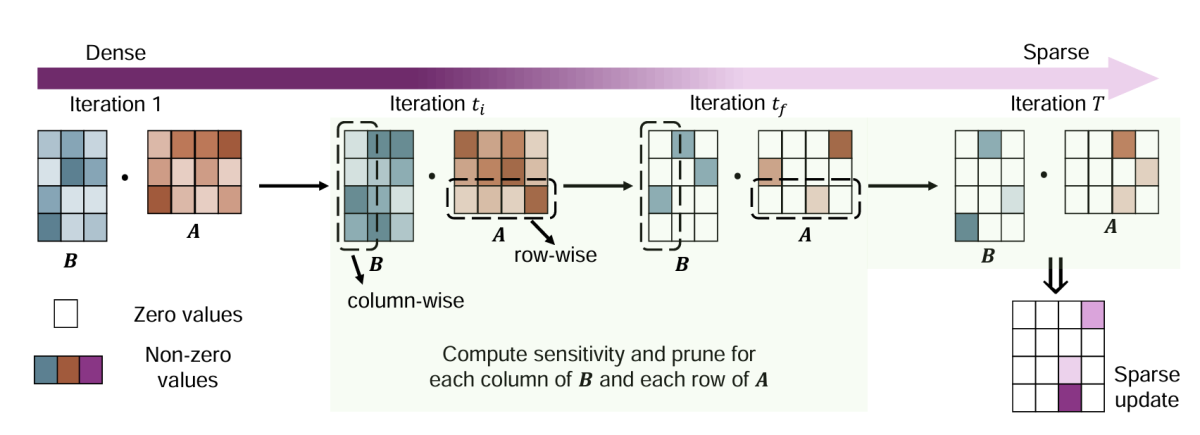
RoseLoRA: Row and column-wise sparse low-rank adaptation of pre-trained language model for knowledge editing and fine-tuning
Haoyu Wang, Tianci Liu, Ruirui Li, Monica Cheng, Tuo Zhao, Jing Gao
RoseLoRA.png
The row- and column-wise sparse low-rank adaptation (RoseLoRA) framework proposed in "RoseLoRA: Row and column-wise sparse low-rank adaptation of pre-trained language model for knowledge editing and fine-tuning".

LLMs for speech

Speechworthy instruction-tuned language models
Hyundong Cho, Nicolaas Jedema, Leonardo Ribeiro, Karishma Sharma, Pedro Szekely, Alessandro Moschitti, Ruben Janssen, Jonathan May

LLM misinformation mitigation

ECON: On the detection and resolution of evidence conflicts
Cheng Jiayang, Chunkit Chan, Qianqian Zhuang, Lin Qiu, Tianhang Zhang, Tengxiao Liu, Yangqiu Song, Yue Zhang, Pengfei Liu, Zheng Zhang

Generative subgraph retrieval for knowledge graph–grounded dialog generation
Jinyoung Park, Minseok Joo, Joo-Kyung Kim, Hyunwoo J. Kim

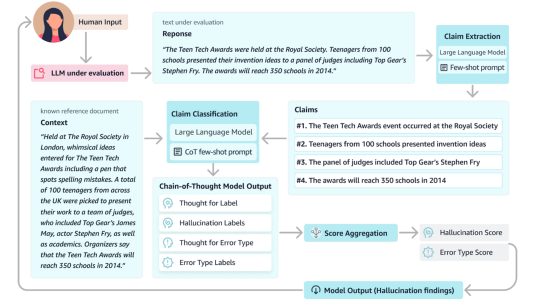
HalluMeasure: Fine-grained hallucination measurement using chain-of-thought reasoning
Shayan Ali Akbar, Md Mosharaf Hossain, Tess Wood, Si-Chi Chin, Erica Salinas, Victor Alvarez, Erwin Cornejo

Knowledge-centric hallucination detection
Xiangkun Hu, Dongyu Ru, Lin Qiu, Qipeng Guo, Tianhang Zhang, Yang Xu, Yun Luo, Pengfei Liu, Zheng Zhang, Yue Zhang

LLM reasoning

Auto-evolve: Enhancing large language model’s performance via self-reasoning framework*
Krishna Aswani, Alex Lu, Pranav Patankar, Priya Dhalwani, Iris Tan, Jayant Ganeshmohan, Simon Lacasse

LLM self-correction

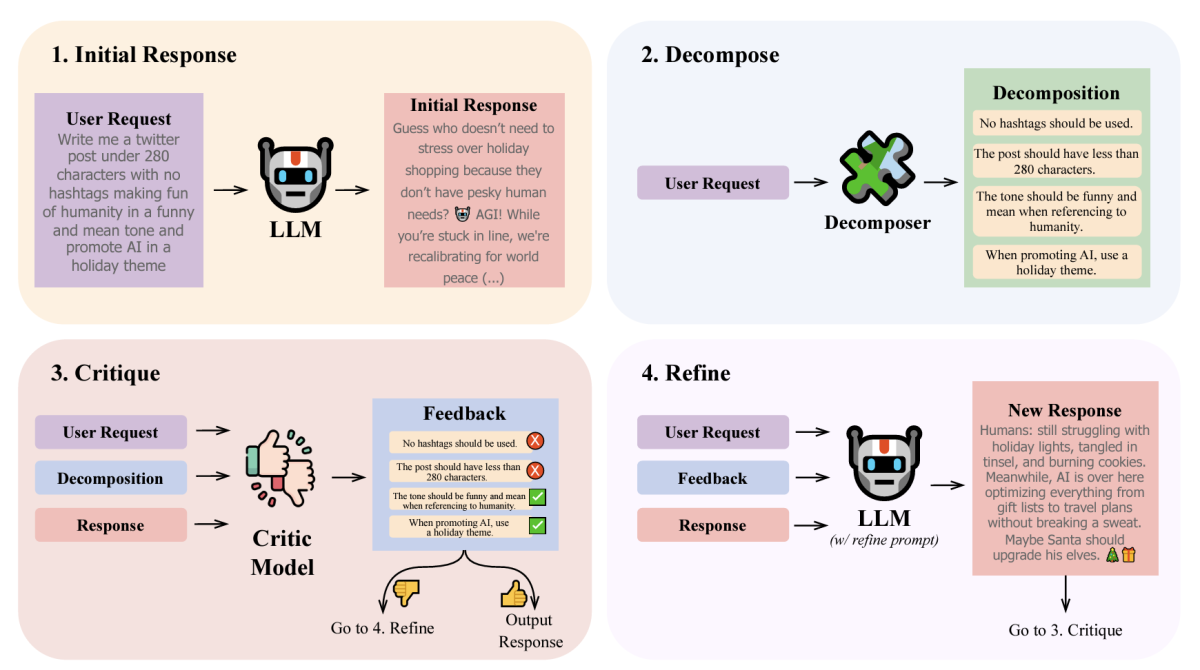
LLM self-correction with DeCRIM: Decompose, critique, and refine for enhanced following of instructions with multiple constraints
Thomas Palmeira Ferraz, Kartik Mehta, Yu-Hsiang Lin, Haw-Shiuan Chang, Shereen Oraby, Sijia Liu, Vivek Subramanian, Tagyoung Chung, Mohit Bansal, Nanyun Peng
DeCRIM.png
In the DeCRIM pipeline proposed in "LLM self-correction with DeCRIM: Decompose, critique, and refine for enhanced following of instructions with multiple constraints", an LLM first generates a response to a user request. The Decomposer then breaks down the request into granular constraints, and the Critic model gives feedback on whether the response meets those constraints. If it does, the response is output; if not, the LLM uses the feedback to refine the response.

LLM training

Dancing in chains: Reconciling instruction following and faithfulness in language models
Zhengxuan Wu, Yuhao Zhang, Peng Qi, Yumo Xu, Rujun Han, Yian Zhang, Jifan Chen, Bonan Min, Zhiheng Huang

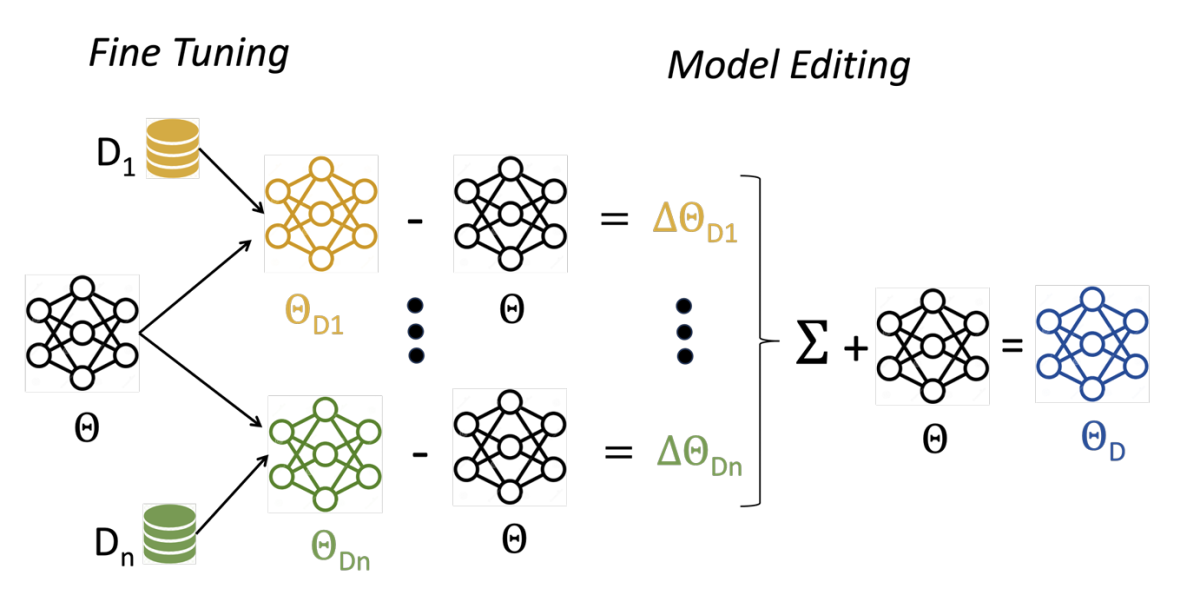
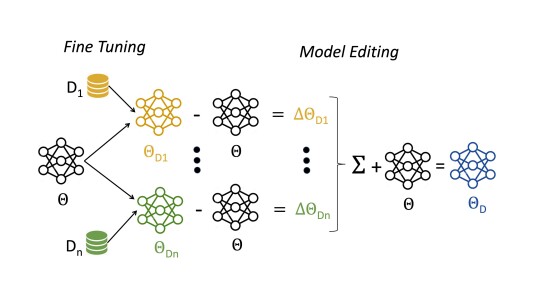
DEM: Distribution edited model for training with mixed data distributions
Dhananjay Ram, Aditya Rawal, Momchil Hardalov, Nikolaos Pappas, Sheng Zha
DEM: Distribution Edited Model for Training with Mixed Data Distributions
The distribution-edited model D) described in "DEM: Distribution edited model for training with mixed data distributions" results from fine-tuning a pretrained model (Θ) on n individual data distributions (Di) and combining the resulting models with basic element-wise vector operations. Here, the extracted distribution vectors (∆ΘDi ) are multiplied by weight coefficients, and the weighted sum is added to the base model.

Evolutionary contrastive distillation for language model alignment
Julian Katz-Samuels, Zheng Li, Hyokun Yun, Priyanka Nigam, Yi Xu, Vaclav Petricek, Bing Yin, Trishul Chilimbi

Hop, skip, jump to convergence: Dynamics of learning rate transitions for improved training of large language models
Shreyas Subramanian, Vignesh Ganapathiraman, Corey Barrett

Learning from relevant subgoals in successful dialogs using iterative training for task-oriented dialog systems
Magdalena Kaiser, Patrick Ernst, Gyuri Szarvas

Quality matters: Evaluating synthetic data for tool-using LLMs
Shadi Iskander, Nachshon Cohen, Zohar Karnin, Ori Shapira, Sofia Tolmach

Query autocompletion

AmazonQAC: A large-scale, naturalistic query autocomplete dataset
Dante Everaert, Rohit Patki, Tianqi Zheng, Christopher Potts

DiAL: Diversity aware listwise ranking for query auto-complete
Sonali Singh, Sachin Farfade, Prakash Mandayam Comar

Question answering

RAG-QA arena: Evaluating domain robustness for long-form retrieval-augmented question answering
Rujun Han, Yuhao Zhang, Peng Qi, Yumo Xu, Jenyuan Wang, Lan Liu, William Yang Wang, Bonan Min, Vittorio Castelli

Retrieving contextual information for long-form question answering using weak supervision
Philipp Christmann, Svitlana Vakulenko, Ionut Teodor Sorodoc, Bill Byrne, Adrià de Gispert

Recommender systems

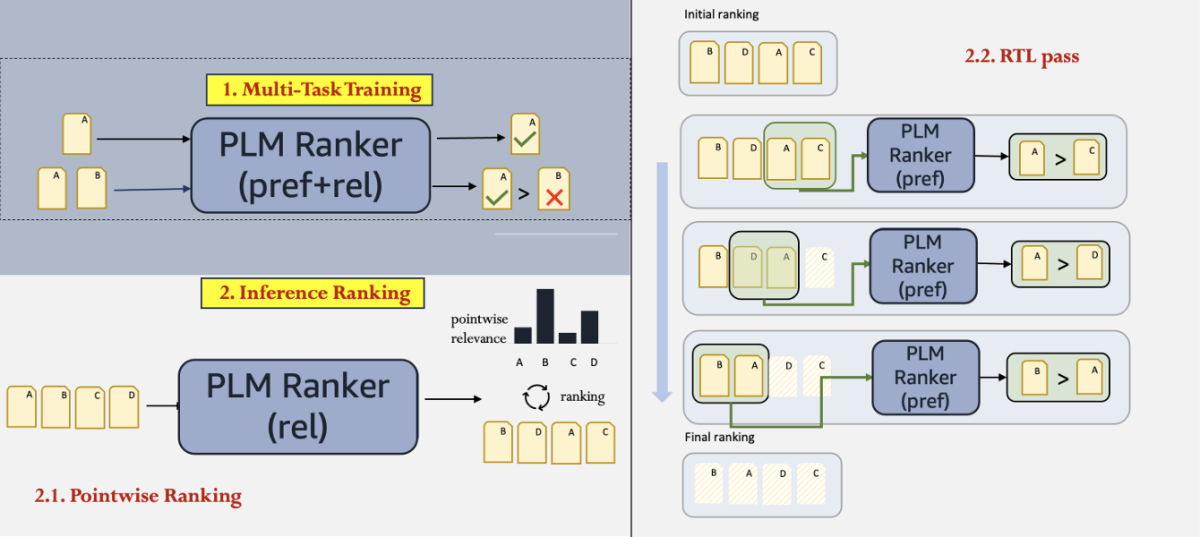
Efficient pointwise-pairwise learning-to-rank for news recommendation
Nithish Kannen Senthilkumar, Yao Ma, Gerrit van den Burg, Jean Baptiste Faddoul
Efficient pointwise-pairwise learning-to-rank for news recommendation.png
An illustration of the GLIMPSE framework proposed in "Efficient pointwise-pairwise learning-to-rank for news recommendation". GLIMPSE adopts a multitask approach in which a pretrained language model is fine-tuned on both the relevance prediction task and the pairwise-preference task. During inference, the relevance predictions are used to produce an initial pointwise ranking, which is subsequently improved by one or more right-to-left (RTL) passes using pairwise comparisons.

PEARL: Preference extraction with exemplar augmentation and retrieval with LLM agents
Vijit Malik, Akshay Jagatap, Vinayak Puranik, Anirban Majumder

Sequential LLM framework for fashion recommendation
Han Liu, Xianfeng Tang, Tianlang Chen, Jiapeng Liu, Indu Indu, Henry Peng Zou, Peng Dai, Roberto Fernandez Galan, Mike Porter, Dongmei Jia, Ning Zhang, Lian Xiong

Responsible AI

Attribute controlled fine-tuning for large language models: A case study on detoxification
Tao Meng, Ninareh Mehrabi, Palash Goyal, Anil Ramakrishna, Aram Galstyan, Richard Zemel, Kai-Wei Chang, Rahul Gupta, Charith Peris

FLIRT: Feedback loop in-context red teaming
Ninareh Mehrabi, Palash Goyal, Christophe Dupuy, Qian Hu, Shalini Ghosh, Richard Zemel, Kai-Wei Chang, Aram Galstyan, Rahul Gupta

Order of magnitude speedups for LLM membership inference
Rongting Zhang, Martin Bertran Lopez, Aaron Roth

Synthetic data generation

CorrSynth: A correlated sampling method for diverse dataset generation from LLMs
Suhas Kowshik, Abhishek Divekar, Vijit Malik
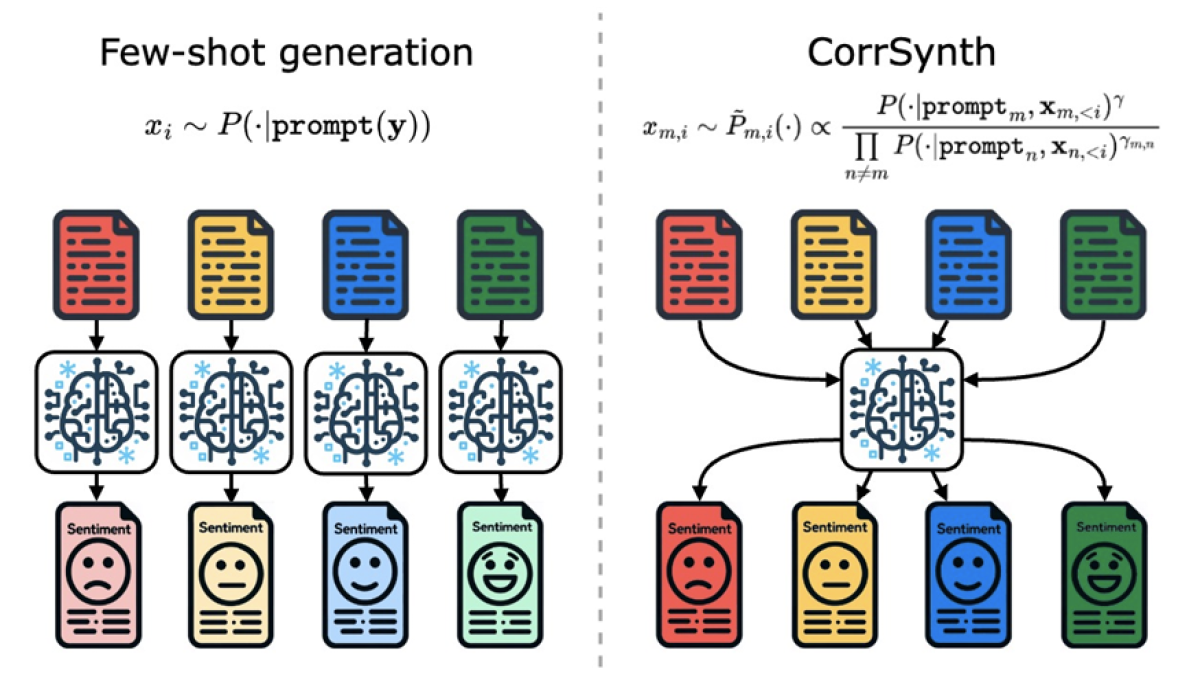
A Correlated Sampling Method for Diverse Dataset Generation from LLMs
"CorrSynth: A correlated sampling method for diverse dataset generation from LLMs" introduces a sampling method that uses anti-correlation between examples rather than few-shot generation.

DATA ADVISOR: Dynamic data curation for safety alignment of large language models
Fei Wang, Ninareh Mehrabi, Palash Goyal, Rahul Gupta, Kai-Wei Chang, Aram Galstyan

Evaluating differentially private synthetic data generation in high-stakes domains
Krithika Ramesh, Nupoor Gandhi, Pulkit Madaan, Lisa Bauer, Charith Peris, Anjalie Field

SYNTHESIZRR: Generating diverse datasets with retrieval augmentation
Abhishek Divekar, Greg Durrett
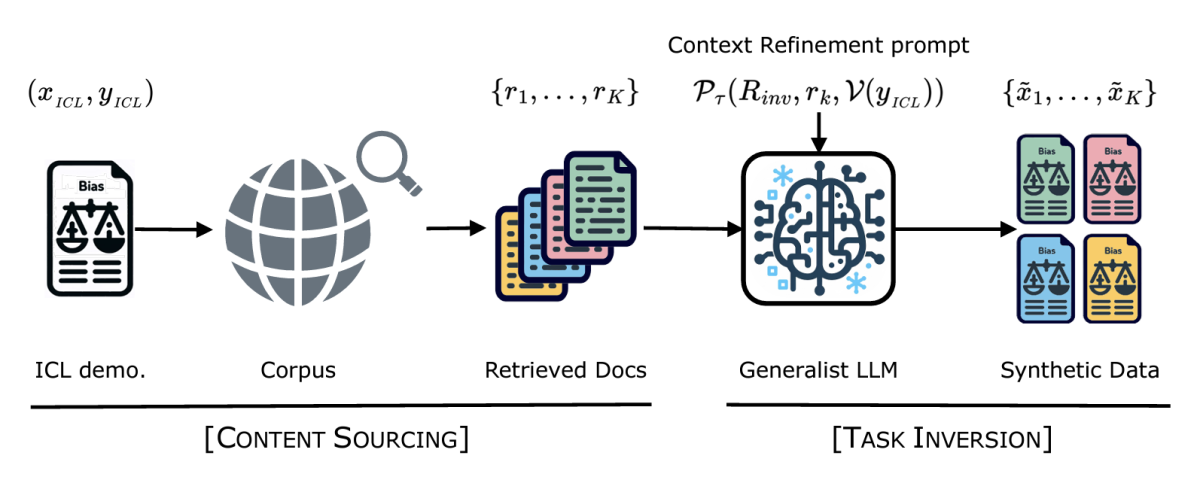
Abstract depiction of the SYNTHESIZRR procedure
Abstract depiction of the procedure proposed in "SYNTHESIZRR: Generating diverse datasets with retrieval augmentation". The content sourcing stage retrieves K unique documents {r1,...,rK} from a large corpus for each in-context covariate xICL. The task-inversion stage uses a parameterized context refinement prompt, Pτ, which takes parameters Rinv (inversion instruction), rk (a retrieved document), and V(yICL) (the verbalized target label). A generalist teacher LLM autoregressively generates a synthetic covariate. Each in-context example thus produces K unique synthetic examples {x̃1,..., x̃K}, which we include in the dataset with target yICL.

Text classification

Distance-aware calibration for pre-trained language models*
Alberto Gasparin, Gianluca Detommaso

Performance-guided LLM knowledge distillation for efficient text classification at scale

Flavio Di Palo, Prateek Singhi, Bilal Fadlallah

Prompt-tuned muti-task taxonomic transformer (PTMTTaxoFormer)
Rajashekar Vasantha, Nhan Nguyen, Yue Zhang

Text summarization

Salient information prompting to steer content in prompt-based abstractive summarization
Lei Xu, Asad Karim, Saket Dingliwal, Aparna Elangovan
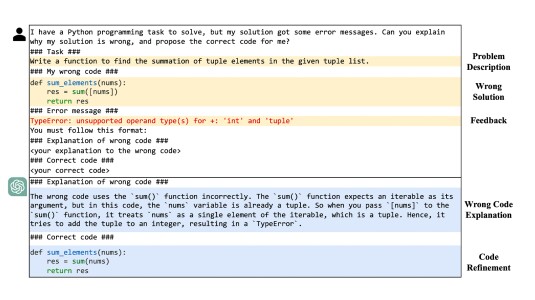
Research areas

Related content

US, NY, New York
About Sponsored Products and Brands The Sponsored Products and Brands team at Amazon Ads is re-imagining the advertising landscape through generative AI technologies, revolutionizing how millions of customers discover products and engage with brands across Amazon.com and beyond. We are at the forefront of re-inventing advertising experiences, bridging human creativity with artificial intelligence to transform every aspect of the advertising lifecycle from ad creation and optimization to performance analysis and customer insights. We are a passionate group of innovators dedicated to developing responsible and intelligent AI technologies that balance the needs of advertisers, enhance the shopping experience, and strengthen the marketplace. If you're energized by solving complex challenges and pushing the boundaries of what's possible with AI, join us in shaping the future of advertising. About our team The Targeting and Recommendations team within Sponsored Products and Brands empowers advertisers with intelligent targeting controls and one-click campaign recommendations that automatically populate optimal settings based on ASIN data. This comprehensive suite provides advanced targeting capabilities through AI-generated keyword and ASIN suggestions, sophisticated targeting controls including Negative Targeting, Manual Targeting with Product Attribute Targeting (PAT) and Keyword Targeting (KWT), and Automated Targeting (ATv2). Our vision is to build a revolutionary, highly personalized and context-aware agentic advertiser guidance system that seamlessly integrates Large Language Models (LLMs) with sophisticated tooling, operating across both conversational and traditional ad console experiences while scaling from natural language queries to proactive, intelligent guidance delivery based on deep advertiser understanding, ultimately enhancing both targeting precision and one-click campaign optimization. Through strategic partnerships across Ad Console, Sales, and Marketing teams, we identify high-impact opportunities spanning from strategic product guidance to granular keyword optimization and deliver them through personalized, scalable experiences grounded in state-of-the-art agent architectures, reasoning frameworks, sophisticated tool integration, and model customization approaches including tuning, MCP, and preference optimization. This presents an exceptional opportunity to shape the future of e-commerce advertising through advanced AI technology at unprecedented scale, creating solutions that directly impact millions of advertisers. Key job responsibilities * Design and build targeting and 1 click recommendation agents to guide advertisers in conversational and non-conversational experience. * Design and implement advanced model and agent optimization techniques, including supervised fine-tuning, instruction tuning and preference optimization (e.g., DPO/IPO). * Collaborate with peers across engineering and product to bring scientific innovations into production. * Stay current with the latest research in LLMs, RL, and agent-based AI, and translate findings into practical applications. * Develop agentic architectures that integrate planning, tool use, and long-horizon reasoning. A day in the life As an Applied Scientist on our team, your days will be immersed in collaborative problem-solving and strategic innovation. You'll partner closely with expert applied scientists, software engineers, and product managers to tackle complex advertising challenges through creative, data-driven solutions. Your work will center on developing sophisticated machine learning and AI models, leveraging state-of-the-art techniques in natural language processing, recommendation systems, and agentic AI frameworks. From designing novel targeting algorithms to building personalized guidance systems, you'll contribute to breakthrough innovations
US, CA, San Francisco
Amazon has launched a new research lab in San Francisco to develop foundational capabilities for useful AI agents. We’re enabling practical AI to make our customers more productive, empowered, and fulfilled. In particular, our work combines large language models (LLMs) with reinforcement learning (RL) to solve reasoning, planning, and world modeling in both virtual and physical environments. Our research builds on that of Amazon’s broader AGI organization, which recently introduced Amazon Nova, a new generation of state-of-the-art foundation models (FMs). Our lab is a small, talent-dense team with the resources and scale of Amazon. Each team in the lab has the autonomy to move fast and the long-term commitment to pursue high-risk, high-payoff research. We’re entering an exciting new era where agents can redefine what AI makes possible. We’d love for you to join our lab and build it from the ground up! Key job responsibilities You will contribute directly to AI agent development in a research engineering role: running experiments, building tools to accelerate scientific workflows, and scaling up AI systems. Key responsibilities include: * Design, maintain, and enhance tools and workflows that support cutting-edge research * Adapt quickly to evolving research priorities and team needs * Stay informed on the latest advancements in large language models and related research * Collaborate closely with researchers to develop new techniques and tools around emerging agent capabilities * Drive project execution, including scoping, prioritization, timeline management, and stakeholder communication * Thrive in a fast-paced, iterative environment, delivering high-quality software on tight schedules * Apply strong software engineering fundamentals to produce clean, reliable, and maintainable code About the team The Amazon AGI SF Lab is focused on developing new foundational capabilities for enabling useful AI agents that can take actions in the digital and physical worlds. In other words, we’re enabling practical AI that can actually do things for us and make our customers more productive, empowered, and fulfilled. The lab is designed to empower AI researchers and engineers to make major breakthroughs with speed and focus toward this goal. Our philosophy combines the agility of a startup with the resources of Amazon. By keeping the team lean, we’re able to maximize the amount of compute per person. Each team in the lab has the autonomy to move fast and the long-term commitment to pursue high-risk, high-payoff research.
US, WA, Seattle
The Sponsored Products and Brands (SPB) team at Amazon Ads is re-imagining the advertising landscape through the latest generative AI technologies, revolutionizing how millions of customers discover products and engage with brands across Amazon.com and beyond. We are at the forefront of re-inventing advertising experiences, bridging human creativity with artificial intelligence to transform every aspect of the advertising lifecycle from ad creation and optimization to performance analysis and customer insights. We are a passionate group of innovators dedicated to developing responsible and intelligent AI technologies that balance the needs of advertisers, enhance the shopping experience, and strengthen the marketplace. If you're energized by solving complex challenges and pushing the boundaries of what's possible with AI, join us in shaping the future of advertising. Key job responsibilities This role will be pivotal in redesigning how ads contribute to a personalized, relevant, and inspirational shopping experience, with the customer value proposition at the forefront. Key responsibilities include, but are not limited to: - Contribute to the design and development of GenAI, deep learning, multi-objective optimization and/or reinforcement learning empowered solutions to transform ad retrieval, auctions, whole-page relevance, and/or bespoke shopping experiences. - Collaborate cross-functionally with other scientists, engineers, and product managers to bring scalable, production-ready science solutions to life. - Stay abreast of industry trends in GenAI, LLMs, and related disciplines, bringing fresh and innovative concepts, ideas, and prototypes to the organization. - Contribute to the enhancement of team’s scientific and technical rigor by identifying and implementing best-in-class algorithms, methodologies, and infrastructure that enable rapid experimentation and scaling. - Mentor and grow junior scientists and engineers, cultivating a high-performing, collaborative, and intellectually curious team. A day in the life As an Applied Scientist on the Sponsored Products and Brands Off-Search team, you will contribute to the development in Generative AI (GenAI) and Large Language Models (LLMs) to revolutionize our advertising flow, backend optimization, and frontend shopping experiences. This is a rare opportunity to redefine how ads are retrieved, allocated, and/or experienced—elevating them into personalized, contextually aware, and inspiring components of the customer journey. You will have the opportunity to fundamentally transform areas such as ad retrieval, ad allocation, whole-page relevance, and differentiated recommendations through the lens of GenAI. By building novel generative models grounded in both Amazon’s rich data and the world’s collective knowledge, your work will shape how customers engage with ads, discover products, and make purchasing decisions. If you are passionate about applying frontier AI to real-world problems with massive scale and impact, this is your opportunity to define the next chapter of advertising science. About the team The Off-Search team within Sponsored Products and Brands (SPB) is focused on building delightful ad experiences across various surfaces beyond Search on Amazon—such as product detail pages, the homepage, and store-in-store pages—to drive monetization. Our vision is to deliver highly personalized, context-aware advertising that adapts to individual shopper preferences, scales across diverse page types, remains relevant to seasonal and event-driven moments, and integrates seamlessly with organic recommendations such as new arrivals, basket-building content, and fast-delivery options. To execute this vision, we work in close partnership with Amazon Stores stakeholders to lead the expansion and growth of advertising across Amazon-owned and -operated pages beyond Search. We operate full stack—from backend ads-retail edge services, ads retrieval, and ad auctions to shopper-facing experiences—all designed to deliver meaningful value. Curious about our advertising solutions? Discover more about Sponsored Products and Sponsored Brands to see how we’re helping businesses grow on Amazon.com and beyond!
US, CA, Sunnyvale
Prime Video is a first-stop entertainment destination offering customers a vast collection of premium programming in one app available across thousands of devices. Prime members can customize their viewing experience and find their favorite movies, series, documentaries, and live sports – including Amazon MGM Studios-produced series and movies; licensed fan favorites; and programming from Prime Video subscriptions such as Apple TV+, HBO Max, Peacock, Crunchyroll and MGM+. All customers, regardless of whether they have a Prime membership or not, can rent or buy titles via the Prime Video Store, and can enjoy even more content for free with ads. Are you interested in shaping the future of entertainment? Prime Video's technology teams are creating best-in-class digital video experience. As a Prime Video team member, you’ll have end-to-end ownership of the product, user experience, design, and technology required to deliver state-of-the-art experiences for our customers. You’ll get to work on projects that are fast-paced, challenging, and varied. You’ll also be able to experiment with new possibilities, take risks, and collaborate with remarkable people. We’ll look for you to bring your diverse perspectives, ideas, and skill-sets to make Prime Video even better for our customers. With global opportunities for talented technologists, you can decide where a career Prime Video Tech takes you! Key job responsibilities As an Applied Scientist at Prime Video, you will have end-to-end ownership of the product, related research and experimentation, applying advanced machine learning techniques in computer vision (CV), Generative AI, multimedia understanding and so on. You’ll work on diverse projects that enhance Prime Video’s content localization, image/video understanding, and content personalization, driving impactful innovations for our global audience. Other responsibilities include: - Research and develop generative models for controllable synthesis across images, video, vector graphics, and multimedia - Innovate in advanced diffusion and flow-based methods (e.g., inverse flow matching, parameter efficient training, guided sampling, test-time adaptation) to improve efficiency, controllability, and scalability. - Advance visual grounding, depth and 3D estimation, segmentation, and matting for integration into pre-visualization, compositing, VFX, and post-production pipelines. - Design multimodal GenAI workflows including visual-language model tooling, structured prompt orchestration, agentic pipelines. A day in the life Prime Video is pioneering the use of Generative AI to empower the next generation of creatives. Our mission is to make world-class media creation accessible, scalable, and efficient. We are seeking an Applied Scientist to advance the state of the art in Generative AI and to deliver these innovations as production-ready systems at Amazon scale. Your work will give creators unprecedented freedom and control while driving new efficiencies across Prime Video’s global content and marketing pipelines. This is a newly formed team within Prime Video Science!
US, CA, Sunnyvale
Prime Video is a first-stop entertainment destination offering customers a vast collection of premium programming in one app available across thousands of devices. Prime members can customize their viewing experience and find their favorite movies, series, documentaries, and live sports – including Amazon MGM Studios-produced series and movies; licensed fan favorites; and programming from Prime Video subscriptions such as Apple TV+, HBO Max, Peacock, Crunchyroll and MGM+. All customers, regardless of whether they have a Prime membership or not, can rent or buy titles via the Prime Video Store, and can enjoy even more content for free with ads. Are you interested in shaping the future of entertainment? Prime Video's technology teams are creating best-in-class digital video experience. As a Prime Video team member, you’ll have end-to-end ownership of the product, user experience, design, and technology required to deliver state-of-the-art experiences for our customers. You’ll get to work on projects that are fast-paced, challenging, and varied. You’ll also be able to experiment with new possibilities, take risks, and collaborate with remarkable people. We’ll look for you to bring your diverse perspectives, ideas, and skill-sets to make Prime Video even better for our customers. With global opportunities for talented technologists, you can decide where a career Prime Video Tech takes you! Key job responsibilities As an Applied Scientist at Prime Video, you will have end-to-end ownership of the product, related research and experimentation, applying advanced machine learning techniques in computer vision (CV), Generative AI, multimedia understanding and so on. You’ll work on diverse projects that enhance Prime Video’s content localization, image/video understanding, and content personalization, driving impactful innovations for our global audience. Other responsibilities include: - Research and develop generative models for controllable synthesis across images, video, vector graphics, and multimedia - Innovate in advanced diffusion and flow-based methods (e.g., inverse flow matching, parameter efficient training, guided sampling, test-time adaptation) to improve efficiency, controllability, and scalability. - Advance visual grounding, depth and 3D estimation, segmentation, and matting for integration into pre-visualization, compositing, VFX, and post-production pipelines. - Design multimodal GenAI workflows including visual-language model tooling, structured prompt orchestration, agentic pipelines. A day in the life Prime Video is pioneering the use of Generative AI to empower the next generation of creatives. Our mission is to make world-class media creation accessible, scalable, and efficient. We are seeking an Applied Scientist to advance the state of the art in Generative AI and to deliver these innovations as production-ready systems at Amazon scale. Your work will give creators unprecedented freedom and control while driving new efficiencies across Prime Video’s global content and marketing pipelines. This is a newly formed team within Prime Video Science!
US, WA, Seattle
About Sponsored Products and Brands: The Sponsored Products and Brands team at Amazon Ads is re-imagining the advertising landscape through industry leading generative AI technologies, revolutionizing how millions of customers discover products and engage with brands across Amazon.com and beyond. We are at the forefront of re-inventing advertising experiences, bridging human creativity with artificial intelligence to transform every aspect of the advertising lifecycle from ad creation and optimization to performance analysis and customer insights. We are a passionate group of innovators dedicated to developing responsible and intelligent AI technologies that balance the needs of advertisers, enhance the shopping experience, and strengthen the marketplace. If you're energized by solving complex challenges and pushing the boundaries of what's possible with AI, join us in shaping the future of advertising. About Our Team: The Sponsored Brands Impressions-based Offerings team is responsible for evolving the value proposition of Sponsored Brands to drive brand advertising in retail media at scale, helping brands get discovered, acquire new customers and sustainably grow customer lifetime value. We build end-to-end solutions that enable brands to drive discovery, visibility and share of voice. This includes building advertiser controls, shopper experiences, monetization strategies and optimization features. We succeed when (1) shoppers discover, engage and build affinity with brands and (2) brands can grow their business at scale with our advertising products. About This Role: As an Applied Scientist on our team, you will: * Develop AI solutions for Sponsored Brands advertiser and shopper experiences. Build monetization and optimization systems that leverage generative models to value and improve campaign performance. * Define a long-term science vision and roadmap for our Sponsored Brands advertising business, driven from our customers' needs, translating that direction into specific plans for applied scientists and engineering teams. This role combines science leadership, organizational ability, technical strength, product focus, and business understanding. * Design and conduct A/B experiments to evaluate proposed solutions based on in-depth data analyses. * Effectively communicate technical and non-technical ideas with teammates and stakeholders; * Stay up-to-date with advancements and the latest modeling techniques in the field. * Think big about the arc of development of Gen AI over a multi-year horizon and identify new opportunities to apply these technologies to solve real-world problems. #GenAI
US, MA, Boston
AI is the most transformational technology of our time, capable of tackling some of humanity’s most challenging problems. That is why Amazon is investing in generative AI (GenAI) and the responsible development and deployment of large language models (LLMs) across all of our businesses. Come build the future of human-technology interaction with us. We are looking for an Applied Scientist with strong technical skills which includes coding and natural language processing experience in dataset construction, training and evaluating models, and automatic processing of large datasets. You will play a critical role in driving innovation and advancing the state-of-the-art in natural language processing and machine learning. You will work closely with cross-functional teams, including product managers, language engineers, and other scientists. Key job responsibilities Specifically, the Applied Scientist will: • Ensure quality of speech/language/other data throughout all stages of acquisition and processing, including data sourcing/collection, ground truth generation, normalization, transformation, cross-lingual alignment/mapping, etc. • Clean, analyze and select speech/language/other data to achieve goals • Build and test models that elevate the customer experience • Collaborate with colleagues from science, engineering and business backgrounds • Present proposals and results in a clear manner backed by data and coupled with actionable conclusions • Work with engineers to develop efficient data querying infrastructure for both offline and online use cases
US, WA, Seattle
About Sponsored Products and Brands: The Sponsored Products and Brands team at Amazon Ads is re-imagining the advertising landscape through industry leading generative AI technologies, revolutionizing how millions of customers discover products and engage with brands across Amazon.com and beyond. We are at the forefront of re-inventing advertising experiences, bridging human creativity with artificial intelligence to transform every aspect of the advertising lifecycle from ad creation and optimization to performance analysis and customer insights. We are a passionate group of innovators dedicated to developing responsible and intelligent AI technologies that balance the needs of advertisers, enhance the shopping experience, and strengthen the marketplace. If you're energized by solving complex challenges and pushing the boundaries of what's possible with AI, join us in shaping the future of advertising. About Our Team: The Sponsored Brands Impressions-based Offerings team is responsible for evolving the value proposition of Sponsored Brands to drive brand advertising in retail media at scale, helping brands get discovered, acquire new customers and sustainably grow customer lifetime value. We build end-to-end solutions that enable brands to drive discovery, visibility and share of voice. This includes building advertiser controls, shopper experiences, monetization strategies and optimization features. We succeed when (1) shoppers discover, engage and build affinity with brands and (2) brands can grow their business at scale with our advertising products. About This Role: As an Applied Scientist on our team, you will: * Develop AI solutions for Sponsored Brands advertiser and shopper experiences. Build monetization and optimization systems that leverage generative models to value and improve campaign performance. * Define a long-term science vision and roadmap for our Sponsored Brands advertising business, driven from our customers' needs, translating that direction into specific plans for applied scientists and engineering teams. This role combines science leadership, organizational ability, technical strength, product focus, and business understanding. * Design and conduct A/B experiments to evaluate proposed solutions based on in-depth data analyses. * Effectively communicate technical and non-technical ideas with teammates and stakeholders; * Stay up-to-date with advancements and the latest modeling techniques in the field. * Think big about the arc of development of Gen AI over a multi-year horizon and identify new opportunities to apply these technologies to solve real-world problems. #GenAI
US, WA, Seattle
About Sponsored Products and Brands The Sponsored Products and Brands (SPB) team at Amazon Ads is re-imagining the advertising landscape through state-of-art generative AI technologies, revolutionizing how millions of customers discover products and engage with brands across Amazon.com and beyond. We are at the forefront of re-inventing advertising experiences, bridging human creativity with artificial intelligence to transform every aspect of the advertising lifecycle from ad creation and optimization to performance analysis and customer insights. We are a passionate group of innovators dedicated to developing responsible and intelligent AI technologies that balance the needs of advertisers, enhance the shopping experience, and strengthen the marketplace. If you're energized by solving complex challenges and pushing the boundaries of what's possible with AI, join us in shaping the future of advertising. Key job responsibilities This role will be pivotal in redesigning how ads contribute to a personalized, relevant, and inspirational shopping experience, with the customer value proposition at the forefront. Key responsibilities include, but are not limited to: * Contribute to the design and development of GenAI, deep learning, multi-objective optimization and/or reinforcement learning empowered solutions to transform ad retrieval, auctions, whole-page relevance, and/or bespoke shopping experiences. * Collaborate cross-functionally with other scientists, engineers, and product managers to bring scalable, production-ready science solutions to life. * Stay abreast of industry trends in GenAI, LLMs, and related disciplines, bringing fresh and innovative concepts, ideas, and prototypes to the organization. * Contribute to the enhancement of team’s scientific and technical rigor by identifying and implementing best-in-class algorithms, methodologies, and infrastructure that enable rapid experimentation and scaling. * Mentor and grow junior scientists and engineers, cultivating a high-performing, collaborative, and intellectually curious team. A day in the life As an Applied Scientist on the Sponsored Products and Brands Off-Search team, you will contribute to the development in Generative AI (GenAI) and Large Language Models (LLMs) to revolutionize our advertising flow, backend optimization, and frontend shopping experiences. This is a rare opportunity to redefine how ads are retrieved, allocated, and/or experienced—elevating them into personalized, contextually aware, and inspiring components of the customer journey. You will have the opportunity to fundamentally transform areas such as ad retrieval, ad allocation, whole-page relevance, and differentiated recommendations through the lens of GenAI. By building novel generative models grounded in both Amazon’s rich data and the world’s collective knowledge, your work will shape how customers engage with ads, discover products, and make purchasing decisions. If you are passionate about applying frontier AI to real-world problems with massive scale and impact, this is your opportunity to define the next chapter of advertising science. About the team The Off-Search team within Sponsored Products and Brands (SPB) is focused on building delightful ad experiences across various surfaces beyond Search on Amazon—such as product detail pages, the homepage, and store-in-store pages—to drive monetization. Our vision is to deliver highly personalized, context-aware advertising that adapts to individual shopper preferences, scales across diverse page types, remains relevant to seasonal and event-driven moments, and integrates seamlessly with organic recommendations such as new arrivals, basket-building content, and fast-delivery options. To execute this vision, we work in close partnership with Amazon Stores stakeholders to lead the expansion and growth of advertising across Amazon-owned and -operated pages beyond Search. We operate full stack—from backend ads-retail edge services, ads retrieval, and ad auctions to shopper-facing experiences—all designed to deliver meaningful value.
US, MA, Boston
AI is the most transformational technology of our time, capable of tackling some of humanity’s most challenging problems. That is why Amazon is investing in generative AI (GenAI) and the responsible development and deployment of large language models (LLMs) across all of our businesses. Come build the future of human-technology interaction with us. We are looking for an Applied Scientist with strong technical skills which includes coding and natural language processing experience in dataset construction, training and evaluating models, and automatic processing of large datasets. You will play a critical role in driving innovation and advancing the state-of-the-art in natural language processing and machine learning. You will work closely with cross-functional teams, including product managers, language engineers, and other scientists. Key job responsibilities Specifically, the Applied Scientist will: • Ensure quality of speech/language/other data throughout all stages of acquisition and processing, including data sourcing/collection, ground truth generation, normalization, transformation, cross-lingual alignment/mapping, etc. • Clean, analyze and select speech/language/other data to achieve goals • Build and test models that elevate the customer experience • Collaborate with colleagues from science, engineering and business backgrounds • Present proposals and results in a clear manner backed by data and coupled with actionable conclusions • Work with engineers to develop efficient data querying infrastructure for both offline and online use cases