














“Quasi-random” network topologies and new passive optical components called ShuffleBoxes make more-efficient flat networks as practical as traditional “fat-tree” networks.

How we reproduced three attacks that extract private training data from AI models and the cryptographic defenses that stop them.

Amazon engineers and scientists have created new tools to optimize delivery networks under uncertainty — and keep them adapting without missing a beat.

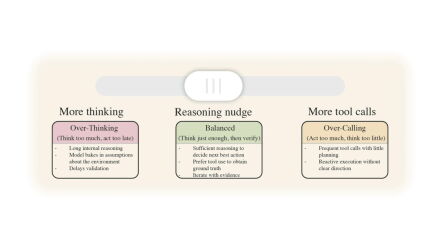
Reasoning models can generate seven to 10 times as many tokens as necessary on simple tasks, creating unsustainable costs at scale. Amazon's vision for metacognitive AI could fundamentally shift how models allocate computational resources.

As AI models grow larger, they become less insightful, not more. To ensure that they continue to learn, we need to reduce their inference time.
Customer-obsessed science


Research areas













-
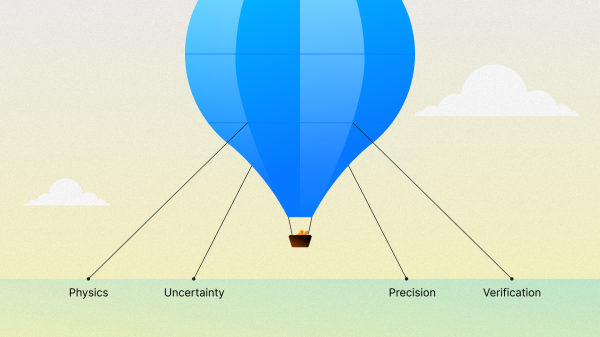
 June 8, 20267 min readFour approaches can dramatically improve the performance and trustworthiness of AI agents in operational environments.
 -

-
-
May 26, 20265 min read
-


Featured news

Hosted by Danielle Perszyk, cognitive scientist at Amazon's AGI Lab, the podcast features researchers tackling the hardest problems in agentic AI — from building reliable perception systems to designing training environments that mirror human learning.

The Antibody Developability Benchmark is powered by one of the most diverse antibody datasets in public literature, enabling transparent performance evaluation for AI-guided antibody design.

Challenge pushes teams to demonstrate measurable gains in secure-coding performance while building AI agents that advance real-world utility and reliability at scale.

Initiative will fund over 100 doctoral students researching machine learning, computer vision, and natural-language processing at nine universities.
-
2026While Large Language Models excel at reasoning and language understanding, they struggle with multi-step operational workflows requiring precise procedural adherence, which is fundamental for industrial automation. Existing SOP-guided agents assume well-defined procedures and structured APIs, failing to address enterprise realities like incomplete SOPs, dynamic web interfaces, and unpredictable document
-
2026Activation outliers in large-scale transformer models pose a fundamental challenge to model quantization, creating excessively large ranges that cause severe accuracy drops during quantization. We empirically observe that outlier severity intensifies with pre-training scale (e.g., progressing from CLIP to the more extensively trained SigLIP and SigLIP2). Through theoretical analysis as well as empirical
-
CVPR 2026 Workshop on Grounded Retrieval and Agentic Intelligence for Vision-Language (GRAIL-V)2026Visual compliance verification is a critical yet underexplored problem in computer vision, especially in domains such as media, entertainment, and advertising where content must adhere to complex and evolving policy rules. Existing methods often rely on task-specific deep learning models trained on manually labeled datasets, which are costly to build and limited in generalizability. While recent Multimodal
-
2026Multi-modal Large Language Models (MLLMs) show promise in video understanding. However, their reasoning often suffers from thinking drift and weak temporal comprehension, even when enhanced by Reinforcement Learning (RL) techniques like Group Relative Policy Optimization (GRPO). Moreover, existing RL methods usually depend on Supervised Fine-Tuning (SFT), which requires costly Chain-of-Thought (CoT) annotation
-
2026Reinforcement Learning from Human Feedback (RLHF) is central to aligning Large Language Models (LLMs), yet it introduces a critical vulnerability: an imperfect Reward Model (RM) can become a single point of failure when it fails to penalize unsafe behaviors. While existing red-teaming approaches primarily target policy-level weaknesses, they overlook what we term systemic weaknesses cases where both the
Collaborations
View allWhether you're a faculty member or student, there are number of ways you can engage with Amazon.
View all

Gretchen Ertl
The program offers unrestricted funds and other resources to support research at academic institutions and non-profit organizations in areas that align with our mission.

A global university competition to drive secure innovation in generative AI technology, which focuses on responsible AI and large language model coding security.

Credit: Wolfram Scheible
We partner with particular academic organizations across the world for deep and sustained collaborations in multiple research areas of mutual interest.

Courtesy of Pai-Ling Yin
We hire world-class academics to work on large-scale technical challenges, while they continue to teach and conduct research at their universities.

